A practical directory for organizing, protecting and transporting
hand tools, precision instruments, rigging hardware and job supplies
in plants, outages, shops, service vehicles and
machinery-installation work.
Skip directly to a selection guide and its exact-product comparisons.
18 storage groups
No single storage system fits every millwright or every jobsite.
Match the storage to your tool load, travel method, environment,
security needs and the work you actually perform.
Capacities and dimensions vary widely. Verify manufacturer ratings
and jobsite requirements before loading, lifting, rolling or
transporting any storage system.
Stationary & shop storage
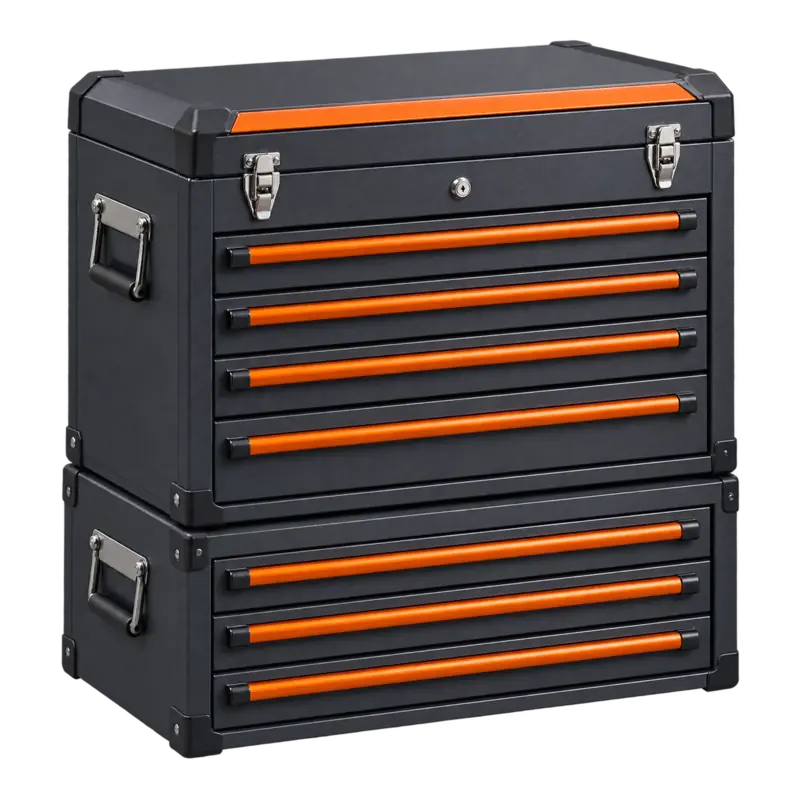
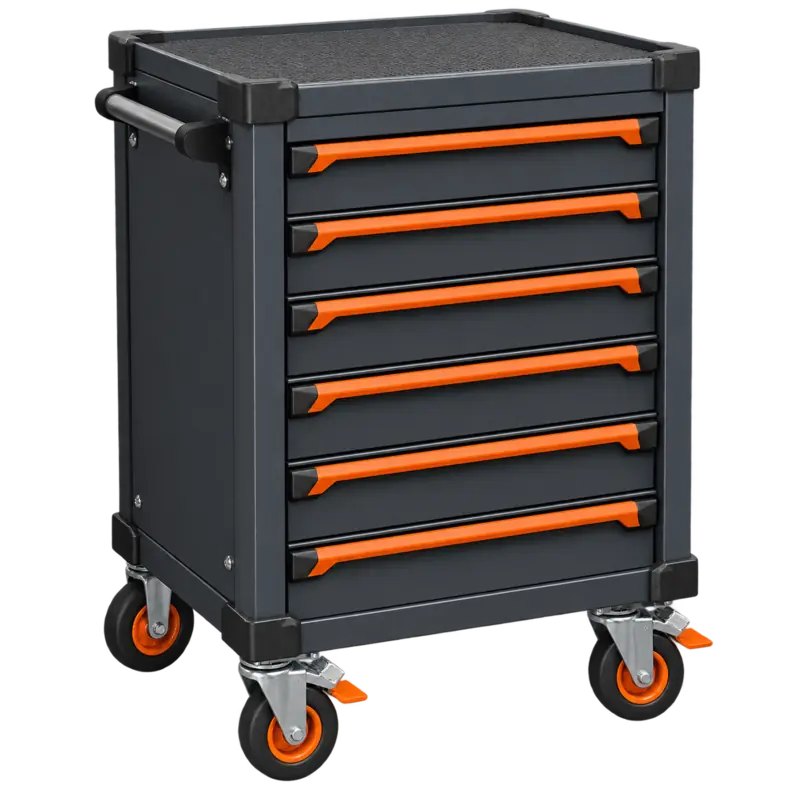
Heavy-Duty Rolling Tool Cabinet
A high-capacity steel drawer cabinet on casters for organizing a
broad personal or shop tool collection while keeping tools
accessible at the work area.
Used for
Organizing hand tools, sockets, wrenches, specialty tools
and protected cases in drawers.
Supports
Plant maintenance, machine shops, long-term assignments and
stationary shop collections.
Sizes & capacity
Compare overall width/depth/height, total rated load,
individual drawer ratings, drawer dimensions and usable
cubic capacity.
Construction & durability
Look at steel gauge, frame reinforcement, drawer-slide
design, caster mounting, finish and replacement-part
support.
Mobility & transport
Large cabinets can be very heavy when loaded. Caster
diameter, wheel material, brakes, handle location, floor
condition and safe transport tie-down points matter.
Locking & security
Compare lock-bar design, key control and whether drawers
positively retain when locked. A cabinet lock reduces theft
risk but does not replace site security.
Buying considerations
Inventory your tools first. Choose drawer heights around
real tool groups rather than buying only by exterior width
or total drawer count.
Field note
Leave room to grow, but avoid turning deep drawers into mixed
piles. Heavy items low and organized usually make the cabinet
easier to use and more stable.
Positioning note: Product grade, value, and price position are relative to comparable products in the same subcategory. They are not capacity ratings, security certifications, or guarantees of performance.
Compare product options
Compare Heavy-Duty Rolling Tool Cabinets
Compare exact manufacturer-and-model products here. Add as many
verified manufacturers and models as the subgroup needs; the
HTML and layout impose no product limit.
Mid-Size Rolling Cabinets
Compare verified mid-size rolling cabinets below. Compact,
full-size, extra-wide and mobile-workstation groups can be
added as exact products are researched.
Heavy-Duty Rolling Tool Cabinets
Milwaukee Tool — 56-inch High Capacity 10-Drawer Steel Storage Cabinet
Manufacturer
Milwaukee Tool
Model number
48-22-8557
Product type
Heavy-Duty Rolling Tool Cabinets
Amazon
Coming soon
Product grade: Premium
Intended use
High-volume stationary shop storage
Best for
Large professional shop tool collections
View details & specifications
Value badge: No Value PickPrice position: Higher
Why this gradeHigh-capacity 18-gauge cabinet with reinforced frame, high-rated drawer slides and integrated shop features.
Value assessmentNo Value Pick
Main advantageHigh storage volume and 150 lb soft-close slides
Main tradeoffLarge footprint and limited field portability
Information last reviewed2026-08-07
Storage type
Rolling steel cabinet
Nominal width
56 in.
Drawer count
10
Storage volume
23,583 cu. in.
Construction
18-gauge steel; reinforced angle-iron frame
Drawer slides
150 lb soft-close full-extension slides
Casters
5 in. industrial casters
Work features
Built-in power center; folding side shelf; power-tool organizer
Information last verified
2026-08-07
Verification note: Exact overall height/depth and empty weight not published on referenced product page.
Heavy-Duty Rolling Tool Cabinets
Milwaukee Tool — 46-inch High Capacity 10-Drawer Steel Storage Cabinet
Manufacturer
Milwaukee Tool
Model number
48-22-8542
Product type
Heavy-Duty Rolling Tool Cabinets
Amazon
Coming soon
Product grade: Professional
Intended use
Daily professional shop storage
Best for
Mid-size industrial/shop tool collections
View details & specifications
Value badge: Value PickPrice position: Moderate
Why this gradeReinforced 18-gauge cabinet with 10 drawers, industrial casters and manufacturer-listed capacity.
Value assessmentValue Pick
Main advantageHigh capacity in a narrower cabinet than the 56-inch option
Main tradeoffLess storage volume than the larger 56-inch cabinet
Information last reviewed2026-08-07
Storage type
Rolling steel cabinet
Nominal width
46 in.
Drawer count
10
Storage volume
19,440 cu. in.
Manufacturer-listed capacity
2,500 lb
Construction
18-gauge steel; reinforced angle-iron frame
Drawer slides
100 lb soft-close slides
Casters
5 in. industrial casters
Information last verified
2026-08-07
Verification note: Exact overall height/depth and empty weight not published on referenced product page.
Why this gradeProfessional metal-storage cabinet with heavy-duty steel construction and rated drawer slides.
Value assessmentThe large cabinet is capable, but its high delivered price faces strong competition from other 52-inch storage systems.
Main advantageWide 52-inch format with heavy-duty drawers
Main tradeoffFewer drawers than the two 10-drawer comparison choices
Information last reviewed2026-08-24
Storage type
Rolling steel cabinet
Nominal width
52 in.
Drawer count
8
Construction
18/20-gauge steel
Drawer capacity
100–150 lb range stated by manufacturer
Mobility
Rolling cabinet with casters
Other published fields
Not published by manufacturer in accessible product listing
Information last verified
2026-08-07
Verification note: Manufacturer page was access-restricted during verification; exact overall dimensions, caster size, empty weight and total cabinet capacity remain unverified.
Secure jobsite storage
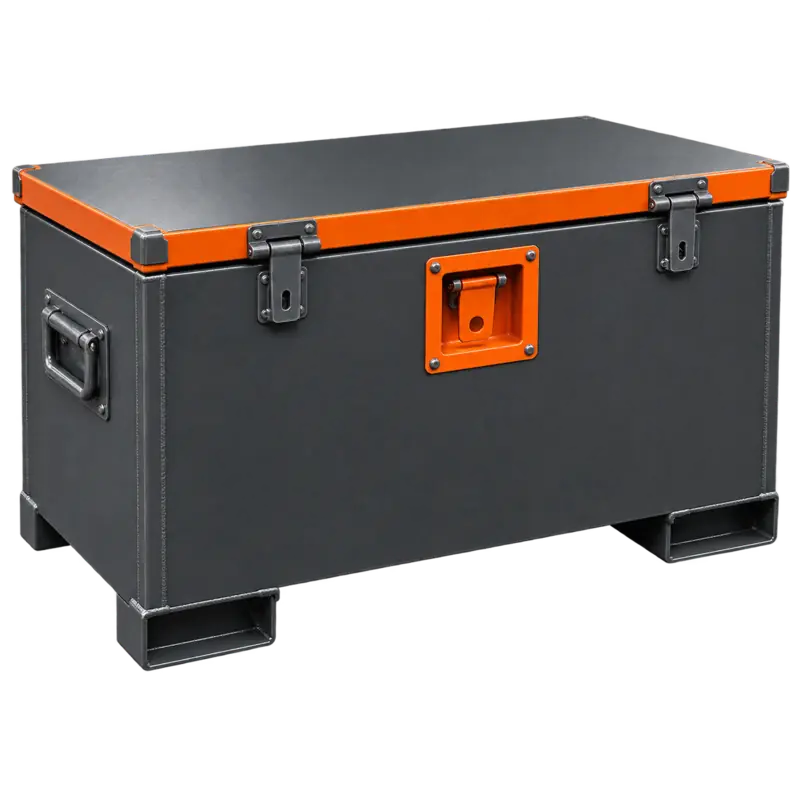
Steel Jobsite Gang Box
A large lockable steel chest intended for shared tools, bulky
equipment and supplies on construction sites, outages and
long-duration field assignments.
Used for
Central storage of crew tools, power tools, rigging
accessories or bulky job equipment.
Supports
Shutdowns, construction, plant projects and long-term
machinery-installation assignments.
Sizes & capacity
Compare footprint, lid opening, internal volume, rated
shelf/accessory loads where stated and available fork-lift
or caster provisions.
Plan how the empty and loaded box will be moved. Use only
manufacturer-approved lifting, fork or caster provisions.
Locking & security
Recessed or protected locking systems can resist casual
tampering; site access control still matters.
Buying considerations
Choose capacity for the crew without creating an
unmanageable loaded box. Consider dividers or smaller
removable cases inside.
Field note
A gang box works better when everyone knows what belongs in
it. Label crew equipment and make the end-of-shift inventory
simple enough that it actually gets done.
Compare product options
Compare Steel Jobsite Gang Boxes
Compare exact manufacturer-and-model products here. Add as many
verified manufacturers and models as the subgroup needs; the
HTML and layout impose no product limit.
Affiliate disclosure: Some Amazon links in this section are affiliate links. I may earn a commission from qualifying purchases at no additional cost to you. As an Amazon Associate I earn from qualifying purchases.
Standard Jobsite Gang Boxes
Compare verified standard jobsite gang boxes below. Compact,
large-capacity and high-security groups can be added as exact
products are researched. Forklift or crane provisions must be
confirmed by the manufacturer before they are described.
Steel Jobsite Gang Boxes
KNAACK — JOBMASTER Chest
Manufacturer
KNAACK
Model number
4824-KL
Product type
Steel Jobsite Gang Boxes
Amazon
Link available
Product grade: Professional
Intended use
Long-duration jobsite tool storage
Best for
Outage and construction assignments needing a mid-size steel chest
View details & specifications
Value badge: Value PickPrice position: Moderate
Why this gradePurpose-built steel jobsite chest with protected lock area and established JOBMASTER storage design.
Value assessmentValue Pick
Main advantagePurpose-built jobsite security layout
Main tradeoffLess mobile until optional casters are fitted
Information last reviewed2026-08-07
Storage type
Steel jobsite chest
Overall footprint
48 in. W × 24 in. D
Locking
KNAACK Padlock included; recessed WATCHMAN-style lock-box system
Casters
Accessory casters available; not represented as included
Overhead lifting
Not verified or claimed
Weather claim
Not represented as waterproof
Information last verified
2026-08-07
Verification note: Exact height, steel gauge, volume and empty weight not captured from the accessible manufacturer page.
Overlapping cover; recessed retained-lock location; locking cover support
Weather claim
Manufacturer states weather resistance; not represented as waterproof
Information last verified
2026-08-07
Verification note: No overhead-lifting approval verified; forklift capability not inferred from skids.
Stackable mobile storage
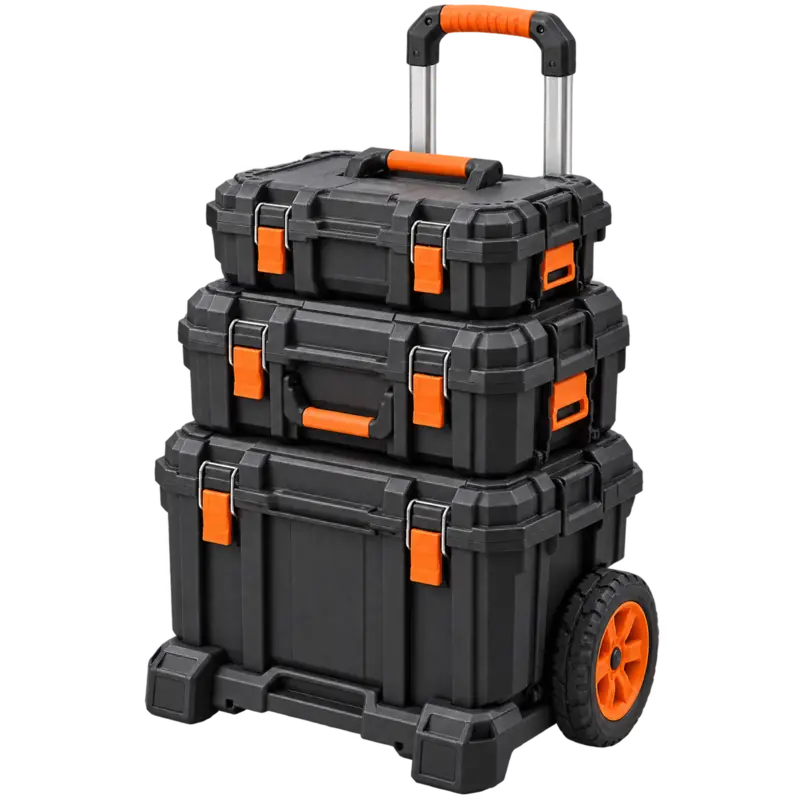
Modular Rolling Tool-Box System
Interlocking polymer or hybrid toolboxes that stack on a wheeled
base and can be configured as separate cases for changing field
assignments.
Used for
Breaking a working tool set into portable modules for hand
tools, power tools, accessories and small parts.
Supports
Outages, service work, installation projects and technicians
who move between work areas.
Sizes & capacity
Compare module dimensions, system and individual-box load
ratings, wheel size, handle height and module compatibility.
Construction & durability
Check latch and hinge durability, impact resistance, handle
structure, wheel/axle design, seals and replacement
components.
Mobility & transport
Large wheels help on imperfect surfaces, but stairs,
grating, gravel and vehicle loading may favor smaller
removable modules.
Locking & security
Check which modules accept locks and whether stacked boxes
can be secured together or to the vehicle/jobsite.
Buying considerations
Make sure the ecosystem offers the drawer, case and
organizer types you need before committing to proprietary
interlocking modules.
Field note
Build modules by task—precision setup, bolting, layout,
power-tool support—so you can take only what the next work
area requires.
Compare product options
Compare Modular Rolling Tool-Box Systems
Compare exact manufacturer-and-model products here. Add as many
verified manufacturers and models as the subgroup needs; the
HTML and layout impose no product limit.
Affiliate disclosure: Some Amazon links in this section are affiliate links. I may earn a commission from qualifying purchases at no additional cost to you. As an Amazon Associate I earn from qualifying purchases.
Rolling Base Boxes
Compare verified rolling base boxes below. Drawer modules,
stackable boxes, small-parts modules, rolling carts, dollies and
complete-set groups can be added as exact products are researched.
Modular Rolling Tool-Box Systems
Milwaukee Tool — PACKOUT Rolling Tool Box
Manufacturer
Milwaukee Tool
Model number
48-22-8426
Product type
Modular Rolling Tool-Box Systems
Amazon
Link available
Product grade: Professional
Intended use
Mobile professional field storage
Best for
Millwrights already using PACKOUT modules
View details & specifications
Value badge: Value PickPrice position: Moderate
Why this gradeHigh published load capacity and native PACKOUT interface make it a strong rolling base for the manufacturer-defined system.
Value assessmentValue Pick
Main advantage250 lb manufacturer-listed capacity and broad modular interface
Main tradeoffDeep bottom-box access can require removing stacked modules
Information last reviewed2026-08-07
Storage type
Modular rolling tool box
Manufacturer-listed capacity
250 lb
Construction
Impact-resistant polymer with metal-reinforced corners
Modular interface
Integrated PACKOUT locking cleats
Handle
Retractable rolling handle
Environmental claim
No exact IP rating used from this referenced page
Included modules
One rolling tool box
Information last verified
2026-08-07
Verification note: Exact product identity and displayed specifications verified from the manufacturer source above.
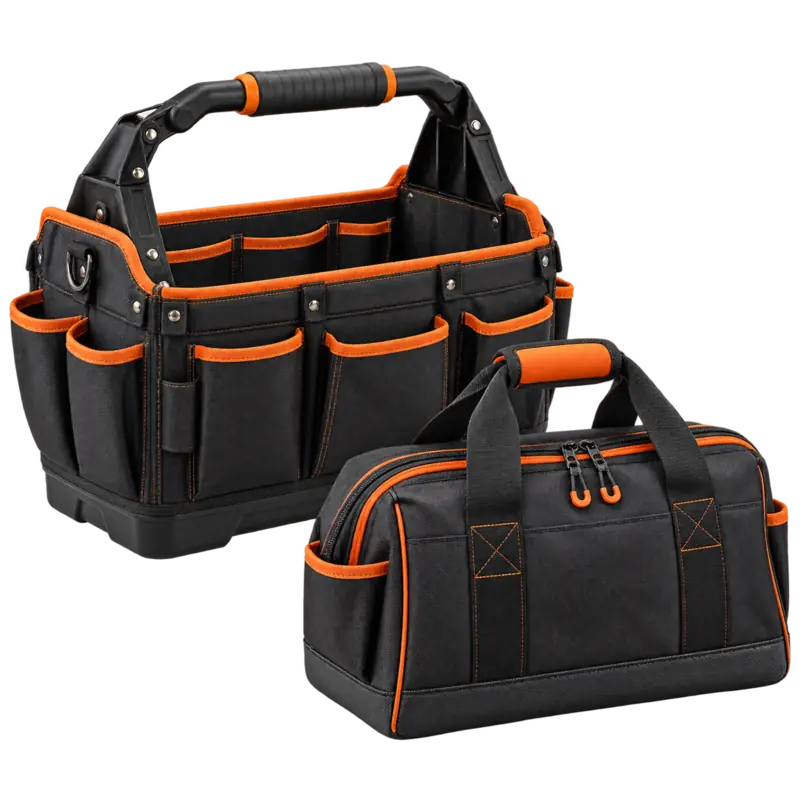
A reinforced fabric or hybrid tote with open access and divided
pockets for the hand tools needed at the immediate task.
Used for
Carrying frequently used wrenches, pliers, drivers, layout
tools and small hand tools within a work area.
Supports
Daily maintenance, walkdowns, equipment assembly and plant
troubleshooting.
Sizes & capacity
Compare overall length, pocket count and size, rated load if
provided, handle clearance and center-compartment
dimensions.
Construction & durability
Look for reinforced handles, abrasion-resistant fabric,
strong stitching/rivets and a durable moisture-resistant
base.
Mobility & transport
Excellent for short carries and quick access, but an
overloaded open tote becomes awkward and exposes tools to
weather and loss.
Locking & security
Most open totes provide little theft protection; store the
tote inside secure storage when unattended.
Buying considerations
Choose pocket geometry for your real tool set and a handle
that remains comfortable when the tote is loaded.
Field note
Use the tote as a working kit, not the whole toolbox. Restock
it from the main box and it stays light enough to carry around
a plant.
Compare product options
Compare Open-Top Millwright Tool Totes
Compare exact manufacturer-and-model products here. Add as many
verified manufacturers and models as the subgroup needs; the
HTML and layout impose no product limit.
Affiliate disclosure: Some Amazon links in this section are affiliate links. I may earn a commission from qualifying purchases at no additional cost to you. As an Amazon Associate I earn from qualifying purchases.
Soft-Sided Tool Totes
Compare verified soft-sided tool totes below. Compact, large,
rigid-sided and removable-organizer groups can be added as exact
products are researched.
Open-Top Millwright Tool Totes
Klein Tools — Tradesman Pro Tool Tote, 40 Pockets, 10-Inch
Manufacturer
Klein Tools
Model number
5541610-14
Product type
Open-Top Millwright Tool Totes
Amazon
Link available
Product grade: Professional
Intended use
Daily field hand-tool storage
Best for
Frequently accessed personal hand tools
View details & specifications
Value badge: Value PickPrice position: Lower
Why this gradeDense pocket organization, molded base and 1680d material are aimed at professional hand-tool carrying.
Value assessmentValue Pick
Main advantage40-pocket organization in a compact footprint
Main tradeoffCompact body limits bulky-tool capacity
Information last reviewed2026-08-07
Storage type
Open-top tool tote
Overall dimensions
10 L × 10.25 W × 12.25 H in.
Pockets
40 total
Material
1680d ballistic weave
Base
Fully molded bottom
Carry
Padded shoulder strap and handles
Empty weight
6 lb
Information last verified
2026-08-07
Verification note: Exact product identity and displayed specifications verified from the manufacturer source above.
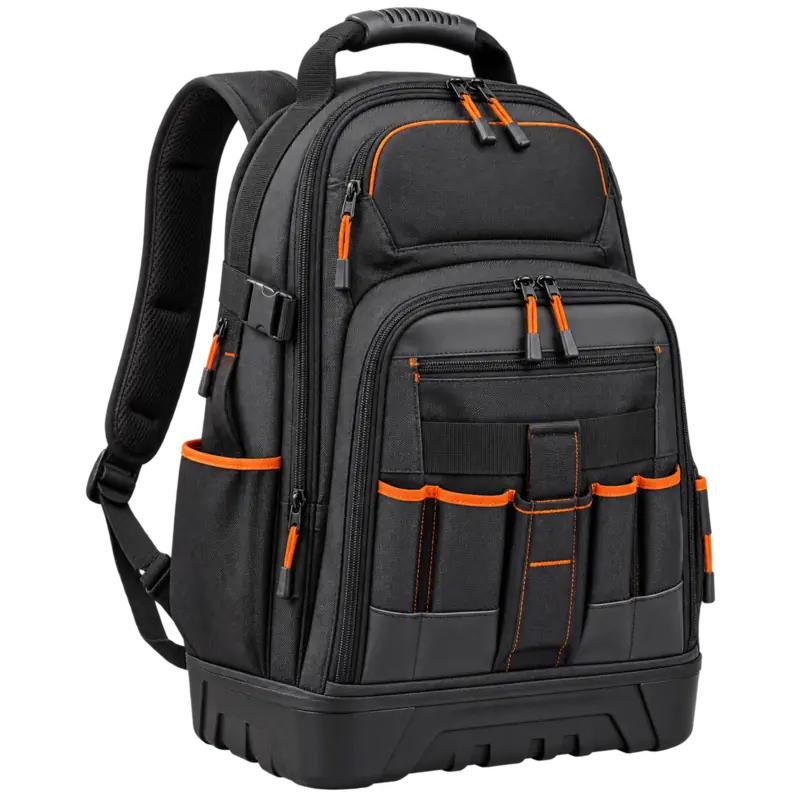
A compartmented backpack built to carry hand tools while leaving
both hands free for walking between approved work locations.
Used for
Transporting a controlled daily tool selection through large
facilities or between service calls.
Supports
Plant maintenance, field service, inspections and tasks
where a rolling box is impractical.
Sizes & capacity
Compare internal volume, pocket layout, tool length
clearance, manufacturer load rating when stated, and
laptop/instrument compartments if needed.
Construction & durability
Inspect zipper quality, reinforced stitching, abrasion
panels, molded base, shoulder-strap anchors and water
resistance.
Mobility & transport
Good load distribution matters; keep the weight reasonable
and follow site rules for ladders, stairs and elevated
access.
Locking & security
Zipper locks offer limited deterrence. Store the pack in
controlled or locked storage when unattended.
Buying considerations
Comfort under realistic load and a layout that prevents
sharp/heavy tools from pressing into your back matter more
than pocket count alone.
Field note
Put dense tools close to your back and avoid carrying
duplicates you never use. A tool backpack gets heavy faster
than it looks.
Compare product options
Compare Heavy-Duty Tool Backpacks
Compare exact manufacturer-and-model products here. Add as many
verified manufacturers and models as the subgroup needs; the
HTML and layout impose no product limit.
Affiliate disclosure: Some Amazon links in this section are affiliate links. I may earn a commission from qualifying purchases at no additional cost to you. As an Amazon Associate I earn from qualifying purchases.
Large-Capacity Tool Backpacks
Compare verified large-capacity tool backpacks below. Compact
service, molded-base, weather-resistant and removable-organizer
groups can be added as exact products are researched.
Heavy-Duty Tool Backpacks
Veto Pro Pac — TECH PAC Backpack Tool Bag
Manufacturer
Veto Pro Pac
Model number
TECH PAC
Product type
Heavy-Duty Tool Backpacks
Amazon
Link available
Product grade: Premium
Intended use
Demanding daily field-tool storage
Best for
Large organized hand-tool and meter collections
View details & specifications
Value badge: No Value PickPrice position: Higher
Why this gradeDual-bay organization, molded base and published 50 lb payload target high-demand trade storage.
Value assessmentNo Value Pick
Main advantage46-pocket dual-bay organization
Main tradeoff10 lb empty weight reduces practical personal-carry margin
Information last reviewed2026-08-07
Storage type
Tool backpack
Overall dimensions
13 W × 19 H × 10 D in.
Empty weight
10 lb
Manufacturer-listed max payload
50 lb
Internal volume
1,450 cu. in. / 24 L
Pockets
46 interior/exterior
Organization
Two storage bays; four storage platforms; tablet/small-laptop pocket
Base
Injection-molded waterproof base
Information last verified
2026-08-07
Verification note: Exact product identity and displayed specifications verified from the manufacturer source above.
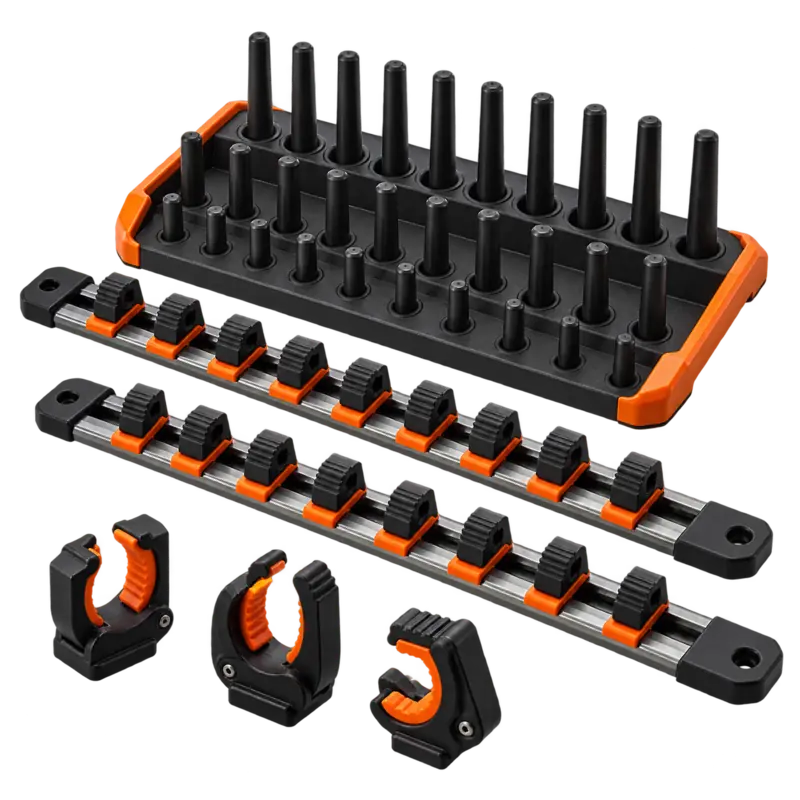
Rails, trays or indexed holders that separate sockets by drive
size, depth and measurement system so missing sizes are easier
to spot.
Used for
Keeping standard, deep, impact and specialty sockets ordered
and visible.
Supports
Assembly, maintenance, bolting and outage work where
repeated size changes are common.
Sizes & capacity
Match 1/4-, 3/8-, 1/2-in. or larger drive families as
needed; confirm socket count, height clearance and
SAE/metric labeling.
Construction & durability
Compare metal rails, polymer trays, retention detents, label
durability and oil/chemical resistance.
Mobility & transport
Positive retention is valuable in portable cases;
low-profile indexed trays work well in stationary drawers.
Locking & security
The organizer itself is not security; place it within
lockable storage and use inventory markings when
appropriate.
Buying considerations
Check clearance with your tallest deep sockets and the exact
drawer height before buying a vertical system.
Field note
Keep SAE and metric visibly separated. At teardown, an empty
labeled socket position tells you what is still at the machine
before the box closes.
Compare product options
Compare Socket Organizer Sets
Compare exact manufacturer-and-model products here. Add as many
verified manufacturers and models as the subgroup needs; the
HTML and layout impose no product limit.
Affiliate disclosure: Some Amazon links in this section are affiliate links. I may earn a commission from qualifying purchases at no additional cost to you. As an Amazon Associate I earn from qualifying purchases.
Socket Rails
Compare verified socket rails below. Locking rail, tray,
magnetic, drawer-fitted and portable-case groups can be added as
exact products are researched. Product cards identify SAE,
metric or mixed sets and applicable drive sizes when confirmed.
Socket Organizer Sets
Ernst Manufacturing — 3 Rail Twist Lock Socket Boss, 18-inch, Blue
Manufacturer
Ernst Manufacturing
Model number
8451
Product type
Socket Organizer Sets
Amazon
Link available
Product grade: Professional
Intended use
Professional drawer and portable socket organization
Best for
Mixed-drive socket collections
View details & specifications
Value badge: Value PickPrice position: Moderate
Why this gradeTwist-lock retention and three drive sizes make this a flexible drawer or portable organizer for existing socket sets.
Value assessmentValue Pick
Main advantage57 configurable twist-lock positions
Main tradeoffRequires manually setting clip layout and labels
Information last reviewed2026-08-07
Storage type
Twist-lock socket rail tray
Drive sizes
1/4, 3/8 and 1/2 in.
Socket capacity
57 clips total: 22 × 1/4, 18 × 3/8, 17 × 1/2
Rail length
18 in.
Retention
Twist-lock clips
Sockets included
No
Information last verified
2026-08-07
Verification note: Exact product identity and displayed specifications verified from the manufacturer source above.
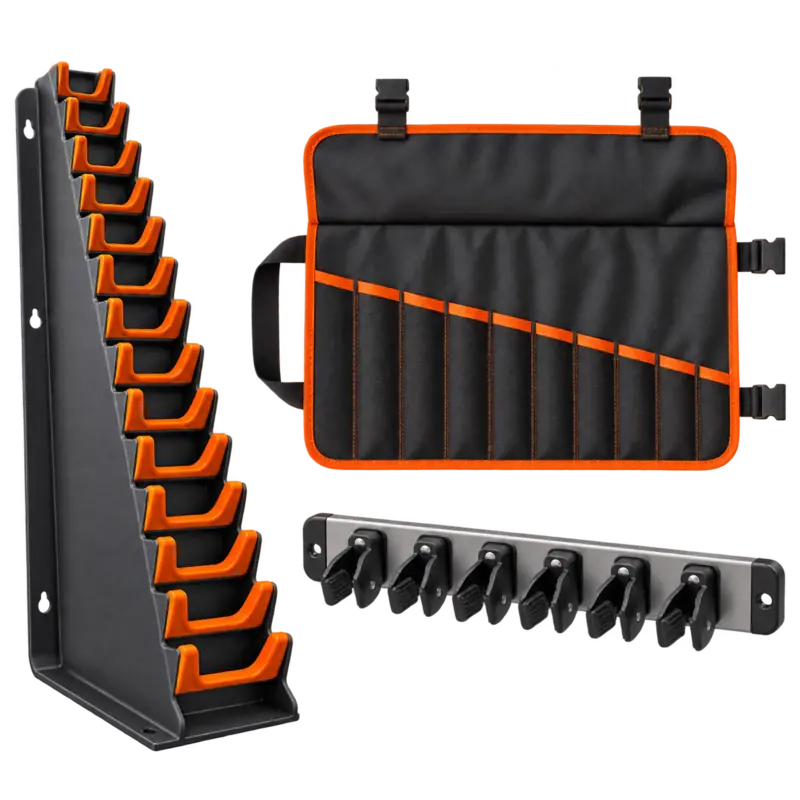
A rack or tray that holds combination, open-end or specialty
wrenches in an ordered sequence for fast selection and inventory
checks.
Used for
Separating and sequencing wrenches by size and measurement
system.
Supports
Daily maintenance, machinery assembly, outage work and shop
organization.
Sizes & capacity
Confirm slot count, wrench width/thickness range, overall
rack size and compatibility with short, standard or
long-pattern wrenches.
Construction & durability
Look for oil-resistant materials, stable mounting, rounded
contact surfaces and clips/slots that do not crack or
release easily.
Mobility & transport
Portable racks need positive retention; drawer racks
prioritize low height and easy removal.
Locking & security
Keep racks in locked storage when unattended and mark
personal tools according to employer/site policy.
Buying considerations
Lay out your longest and thickest wrenches first so the
organizer actually fits both the tools and the drawer.
Field note
Organize small-to-large in the same direction every time. You
stop reading sizes after a while—and a missing wrench stands
out immediately.
Compare product options
Compare Wrench Organizer Racks
Compare exact manufacturer-and-model products here. Add as many
verified manufacturers and models as the subgroup needs; the
HTML and layout impose no product limit.
Affiliate disclosure: Some Amazon links in this section are affiliate links. I may earn a commission from qualifying purchases at no additional cost to you. As an Amazon Associate I earn from qualifying purchases.
Drawer Wrench Trays
Compare verified drawer wrench trays below. Vertical, magnetic,
portable-roll and wall-mounted organizer groups can be added as
exact products are researched.
Wrench Organizer Racks
TEKTON — 15-Tool Wrench Organizer Rack, Black
Manufacturer
TEKTON
Model number
ORG29115
Product type
Wrench Organizer Racks
Amazon
Link available
Product grade: General Purpose
Intended use
Shop drawer organization
Best for
Compact SAE or metric combination-wrench sets
View details & specifications
Value badge: Value PickPrice position: Lower
Why this gradeSimple low-profile 15-slot rack covers common combination-wrench sizes without added mechanisms.
Value assessmentValue Pick
Main advantageLow-profile, fast-access layout
Main tradeoff15 positions will not cover very large sets
Information last reviewed2026-08-07
Storage type
Drawer wrench rack
Wrench capacity
15
Fit range
Combination wrenches from 1/4–1-1/16 in. or 6–27 mm
Profile
Low profile; designed for many 2-in. drawers
Retention
Open quick-access slots
Mounting
Drawer use; no wall-mount claim
Information last verified
2026-08-07
Verification note: Exact product identity and displayed specifications verified from the manufacturer source above.
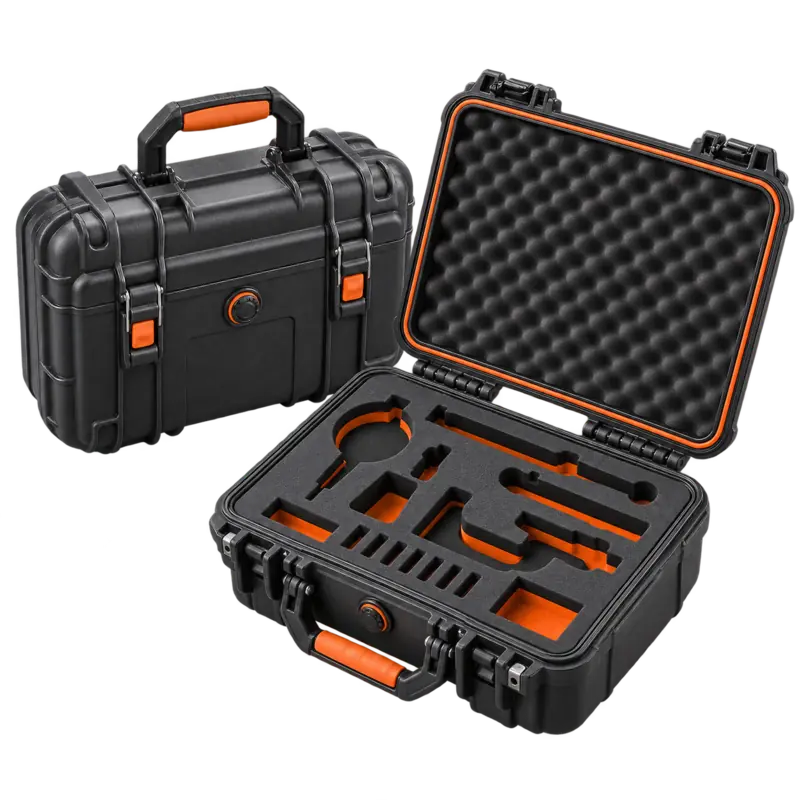
A rigid padded or foam-fitted case used to isolate dial
indicators, machinist levels, micrometers and other precision
instruments from impact, dirt and moisture.
Used for
Keeping calibrated or sensitive instruments separated from
striking tools and loose hardware.
Supports
Alignment, inspection, equipment setup, machine-shop
measurement and field precision work.
Sizes & capacity
Match internal dimensions, usable foam depth and instrument
layout; compare manufacturer environmental ratings where
protection from water/dust is required.
Construction & durability
Evaluate shell impact resistance, hinge/latch quality,
gasket condition and foam density or custom insert options.
Mobility & transport
Choose a carry size that protects the instrument without
allowing it to move inside; larger cases may need wheels or
dedicated vehicle restraint.
Locking & security
Lock points can deter casual access, but calibration control
and secure custody procedures remain separate concerns.
Buying considerations
Fit the most fragile instrument first and allow room for its
accessories without placing pressure on stems, anvils, vials
or indicator mechanisms.
Field note
Put precision tools away clean and dry. A perfect foam cutout
cannot protect an indicator from grit left on it or a
micrometer clamped shut for storage.
Compare product options
Compare Protective Precision Instrument Cases
Compare exact manufacturer-and-model products here. Add as many
verified manufacturers and models as the subgroup needs; the
HTML and layout impose no product limit.
Affiliate disclosure: Some Amazon links in this section are affiliate links. I may earn a commission from qualifying purchases at no additional cost to you. As an Amazon Associate I earn from qualifying purchases.
Foam-Lined Hard Cases
Compare verified foam-lined hard cases below. Waterproof,
pick-and-pluck foam, fitted-instrument, compact-indicator and
large precision-tool groups can be added when exact features are
confirmed by the manufacturer.
Protective Precision Instrument Cases
Pelican — 1200 Protector Case
Manufacturer
Pelican
Model number
1200
Product type
Protective Precision Instrument Cases
Amazon
Link available
Product grade: Professional
Intended use
Controlled precision-instrument storage
Best for
Dial indicators, small micrometers and compact accessories
View details & specifications
Value badge: Value PickPrice position: Moderate
Why this gradeCompact documented dimensions, configurable foam and pressure-equalization valve suit small precision instruments and accessories.
Value assessmentValue Pick
Main advantageCompact case with customizable foam option
Main tradeoffSmall internal volume limits larger bases and multi-tool kits
Information last reviewed2026-08-07
Storage type
Protective hard case
Interior dimensions
9.31 × 7.13 × 4.12 in.
Exterior dimensions
10.67 × 9.75 × 4.86 in.
Weight with foam
2.75 lb
Weight without foam
2.55 lb
Body material
Polypropylene
Foam
Pick N Pluck foam configuration available
Valve
Automatic pressure equalization valve
Lock provision
0.19 in. padlock-hole diameter
Information last verified
2026-08-07
Verification note: Exact product identity and displayed specifications verified from the manufacturer source above.
Selection & capacity reminder: Verify current dimensions, drawer or cabinet capacities, caster ratings, compatibility and transport requirements before purchasing or loading. Consider tool weight, weight distribution, floor condition, mobility needs and jobsite security.
Verified addition
Mini Tool Bucket
Exact owner-selected product added August 17, 2026.
Affiliate disclosure: The Amazon link in this section is an affiliate link. As an Amazon Associate I earn from qualifying purchases at no additional cost to you.
Mini canvas tool bucket
Klein Tools 5104MINI Mini Tool Bucket
Manufacturer
Klein Tools
Model
5104MINI
Product type
small-parts canvas bucket
Amazon
Link available
Product grade: Professional accessory
Intended use
carrying and organizing small tools and supplies
Best for
Fasteners, small hand tools and jobsite supplies that need a compact open-top container.
View details & specifications
Value badge: Value PickPrice position: Lower
Value assessmentThe low price and compact durable bucket format provide good value for organizing small hand tools and hardware.
Field note: This listing does not establish a lifting or personnel-hoisting rating. Do not suspend loads unless the manufacturer expressly permits the exact configuration.
Start with what must be carried, how far it moves, where it lives
between shifts and who needs access.
Daily personal hand tools
A tote, bag, backpack or compact drawer system keeps frequently
used tools accessible without hauling the full collection.
Precision measuring instruments
Use dedicated protective cases or fitted drawers that isolate
clean instruments from impact, chips, moisture and striking
tools.
Shutdown and outage work
Portable modular cases plus a secure base box can balance
mobility across the unit with secure after-shift storage.
Long-term jobsite assignments
Rolling cabinets or gang boxes provide capacity; plan locks,
transport, weather exposure and the route from laydown to work
area.
Service-truck organization
Use restrained drawers, bins and removable task cases sized for
the vehicle. Nothing heavy should become loose cargo.
Rigging hardware
Use clean, dry, identified storage that keeps components
separated where useful and preserves markings and inspection
status.
Consumables & small parts
Divided, labeled organizers control loose fasteners and
supplies; hazardous products require storage per manufacturer
and site rules.
Apprentice tool collections
Start with portable storage sized for core required tools,
leaving modest expansion room instead of buying a huge empty
box.
Large stationary shop collections
High-capacity cabinets and top chests favor drawer access,
weight distribution and inventory control over portability.
Portable vs. stationary
Portable systems trade some capacity for easier movement;
stationary systems emphasize capacity, stability and drawer
access.
Drawers vs. open compartments
Drawers separate and inventory tools well; open storage gives
faster access to bulky or frequently handled equipment.
Steel vs. polymer modular
Steel cabinets excel in high-capacity shop use; polymer modular
systems can be lighter and configurable for field transport.
Personal vs. shared storage
Personal boxes support individual organization; shared gang
boxes need clear ownership, inventory and access practices.
Weather-resistant vs. indoor-only
Outdoor exposure calls for suitable seals, corrosion resistance
and manufacturer-rated protection. “Covered” does not
automatically mean weatherproof.
Organization
Make missing tools obvious
Good organization protects precision equipment and makes the
end-of-job sweep faster.
Separate precision from striking toolsKeep indicators, levels and micrometers away from hammers,
bars and loose heavy hardware.
Protect measuring instrumentsClean and dry them before storing in fitted cases, sleeves or
dedicated lined drawers.
Order sockets and wrenchesSeparate by drive size, then SAE/metric, and use labeled
positions so gaps are visible.
Keep rigging records with the systemMaintain required inspection status and records so stored
equipment can be positively identified.
Label drawers and removable casesUse clear names by task or tool family, especially when
modules move between boxes or crews.
Control loose consumablesUse divided bins for fasteners and supplies; keep
incompatible or hazardous materials under required storage
controls.
Create a basic inventoryA simple checklist, photo inventory or numbered drawer map
can establish what belongs in the kit.
Check before leavingUse empty organizer positions and the inventory to identify
tools still at the machine before teardown is complete.
Safety & field guidance
Store it so it stays controlled
Follow manufacturer ratings, site procedures and transportation
requirements for the specific storage and contents.
Respect capacity: Do not overload rolling
cabinets beyond the manufacturer’s rated capacity or individual
drawer/caster limits.
Close drawers before moving: Keep drawers
closed and secured while a cabinet is being moved; opening
multiple loaded drawers can affect stability.
Keep heavy tools low: Store heavier tools in
lower drawers or compartments when practical, while staying
within every manufacturer-rated capacity and restriction.
Secure transported storage: Large cabinets,
gang boxes and other heavy storage must be properly secured
during transportation.
Do not assume lifting approval: Do not lift a
gang box by crane or other suspended-lifting method unless the
exact product is specifically designed and manufacturer-approved
for that use.
Protect precision tools: Store precision
instruments clean, dry and protected from impact.
Control hazardous materials: Store flammable or
hazardous products according to manufacturer instructions and
applicable site requirements.
Protect rigging hardware: Store lifting
hardware to prevent damage, corrosion and loss of
identification; follow the applicable inspection program.
Keep access clear: Job boxes must not block
access routes, electrical equipment, emergency equipment or
exits.
Security is layered: Locking storage reduces
theft risk but does not replace proper site security and custody
practices.
Editorial labels are not ratings: Product grade
is not a capacity or safety rating, Value Pick never permits
overloading, Premium does not replace transportation securement,
and relative price position does not determine suitability.
No storage system is universal.
The right choice depends on the tool collection, jobsite, travel
method, environment and employer/site requirements. Select storage
for the real assignment and load.
Millwright tool questions
Frequently asked questions
Practical answers for comparing tools, planning the work and choosing equipment for the actual assignment.
Job box vs rolling tool cabinet: which is better for millwrights?
A job box emphasizes secure bulk storage at a site, while a rolling cabinet provides organized drawers and easier access on a suitable shop floor. Consider transport, stairs, crane or forklift provisions, floor condition, weather, theft exposure, tool weight and how often the storage must move.
KNAACK JOBMASTER vs RIDGID 2048: what should I compare?
Compare usable interior size, opening and lock design, material and finish, lift or caster provisions, weather exposure, empty weight and the way each chest will be transported. Verify the exact model rather than assuming all similarly sized steel job boxes have the same capacity or security features.
How should precision millwright tools be stored?
Keep indicators, micrometers, calipers, levels and gauges clean, dry and protected in fitted cases or dedicated padded storage. Do not let precision instruments ride loose with bars, sockets or hammers, and follow the required inspection, lubrication and calibration-control practices.
Are modular rolling tool boxes suitable for outages?
They can be useful when tools must move through a site in organized modules, but wheel size, stairs, floor condition, weather sealing, lock provisions and total stacked weight matter. Keep the stack stable, respect handle and load limits, and separate delicate instruments from rough tools.
New and improved across the directory
Recently updated and related
Jump from the directory into the most useful supporting guide, related method or reviewed product group.