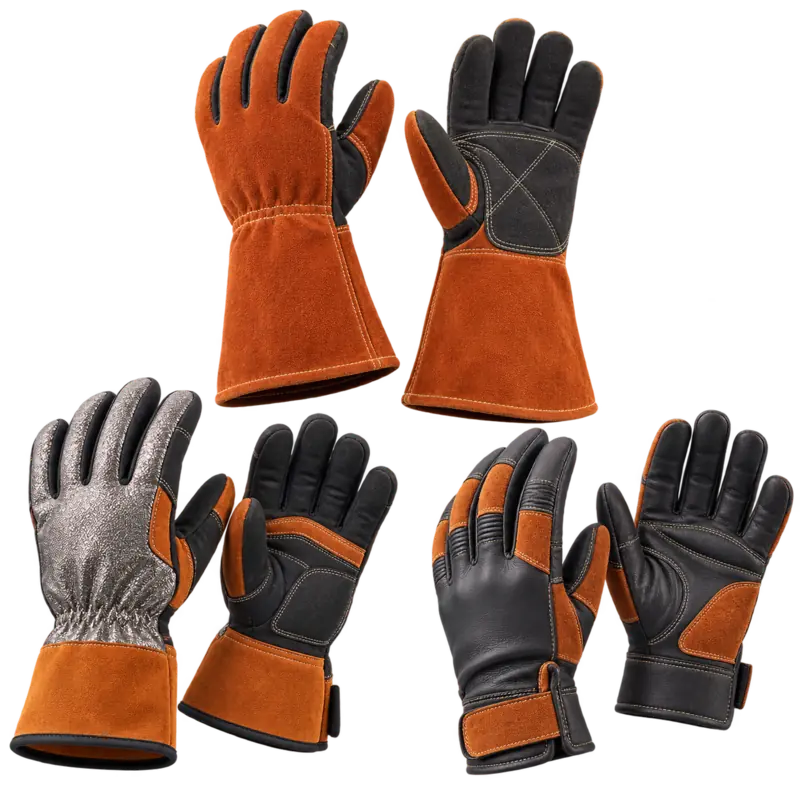
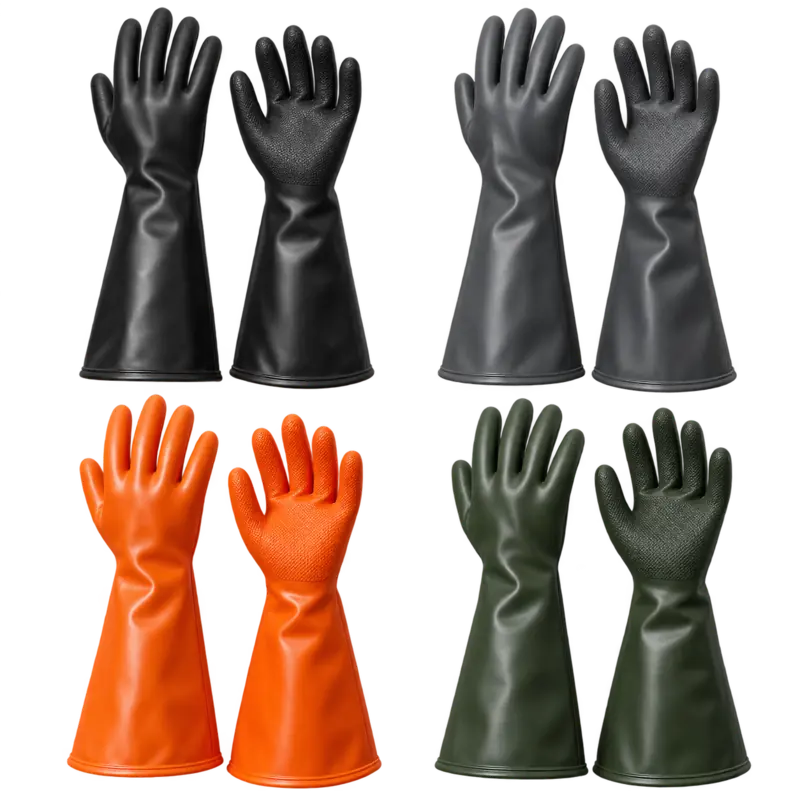
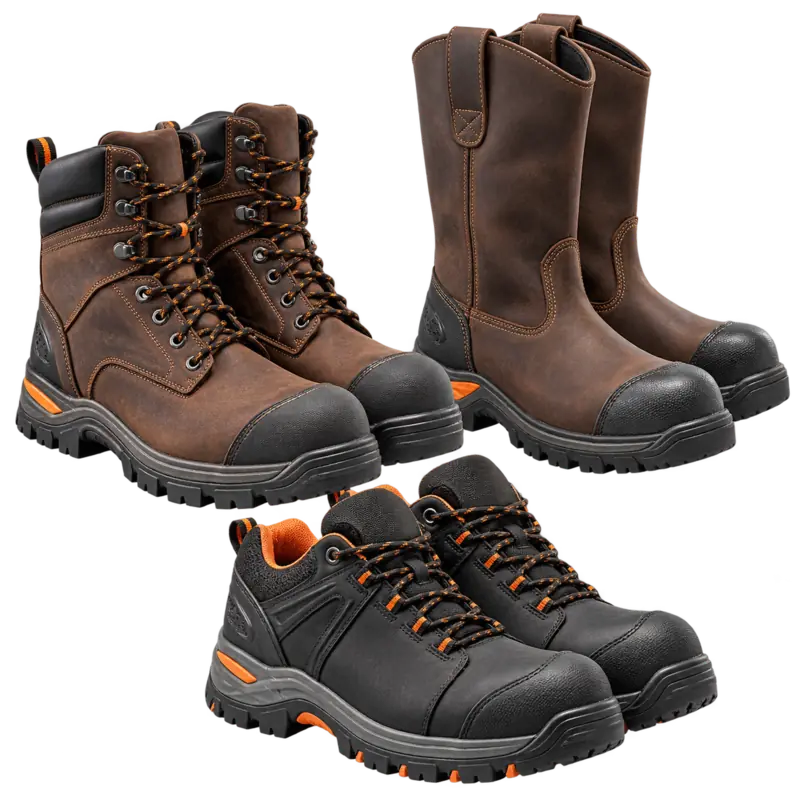
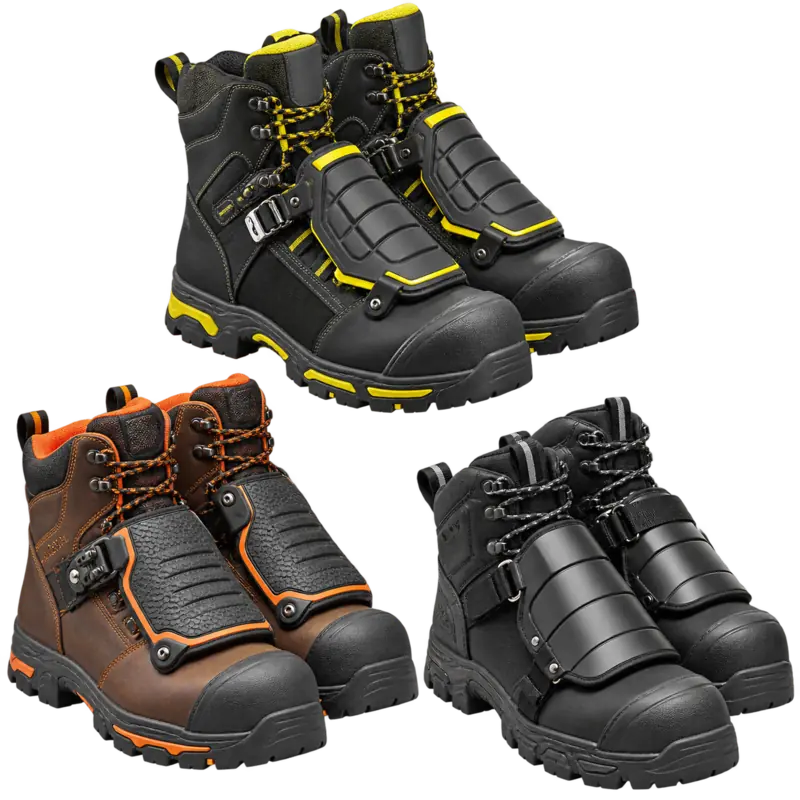
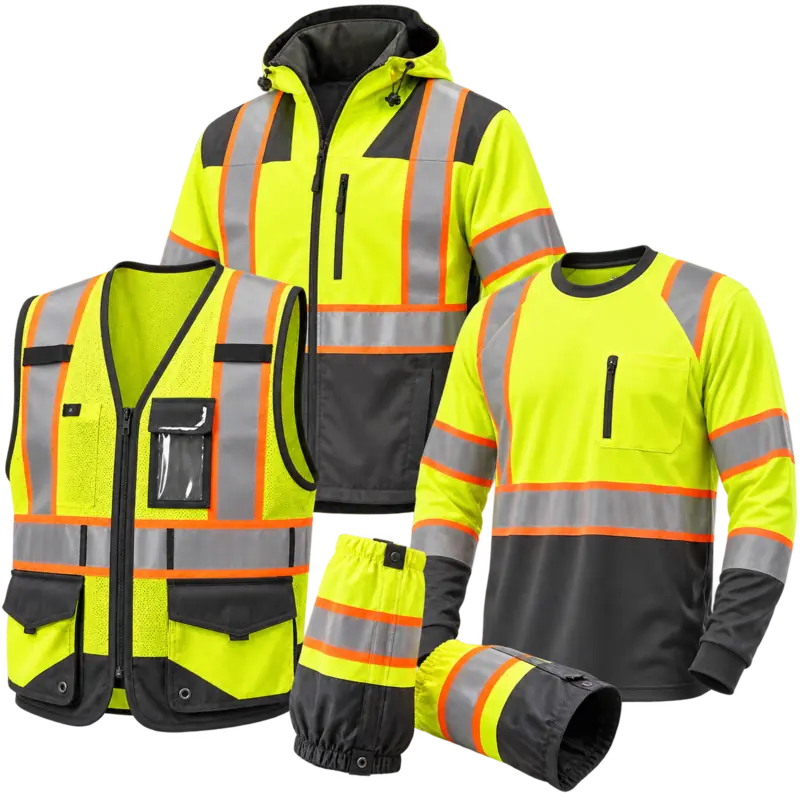
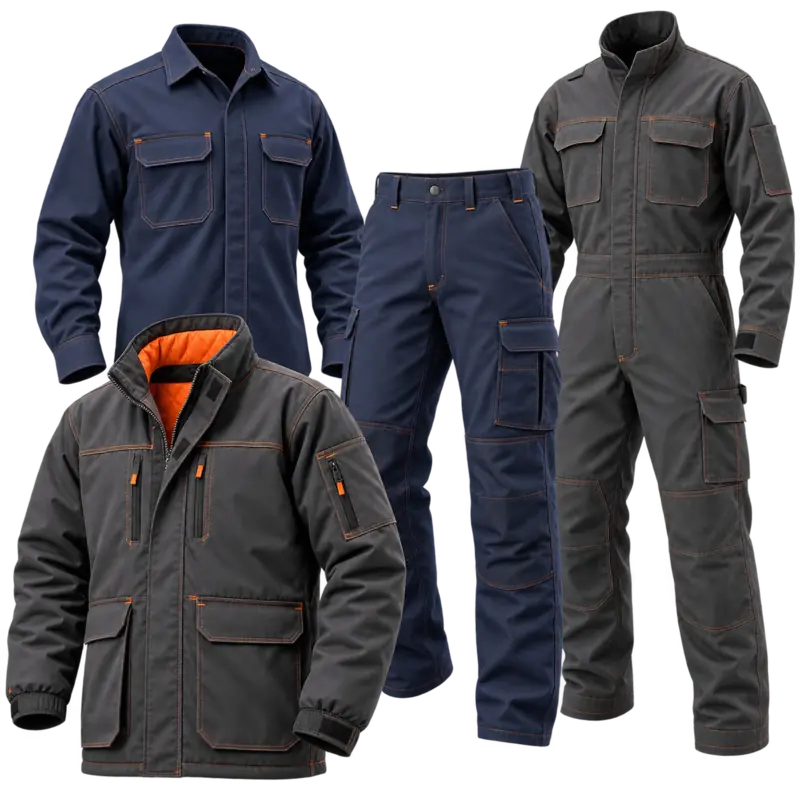
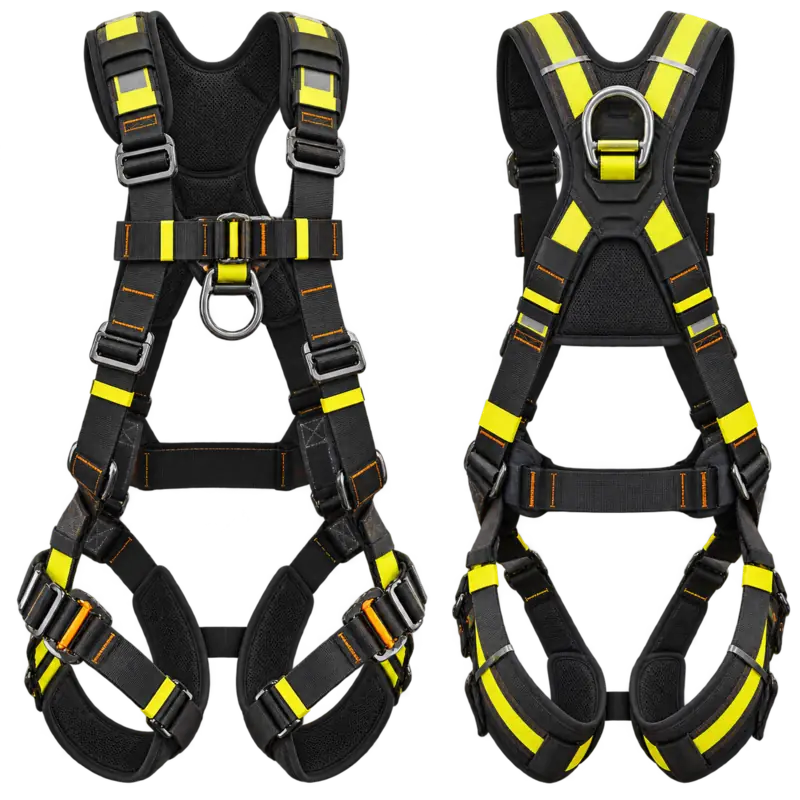
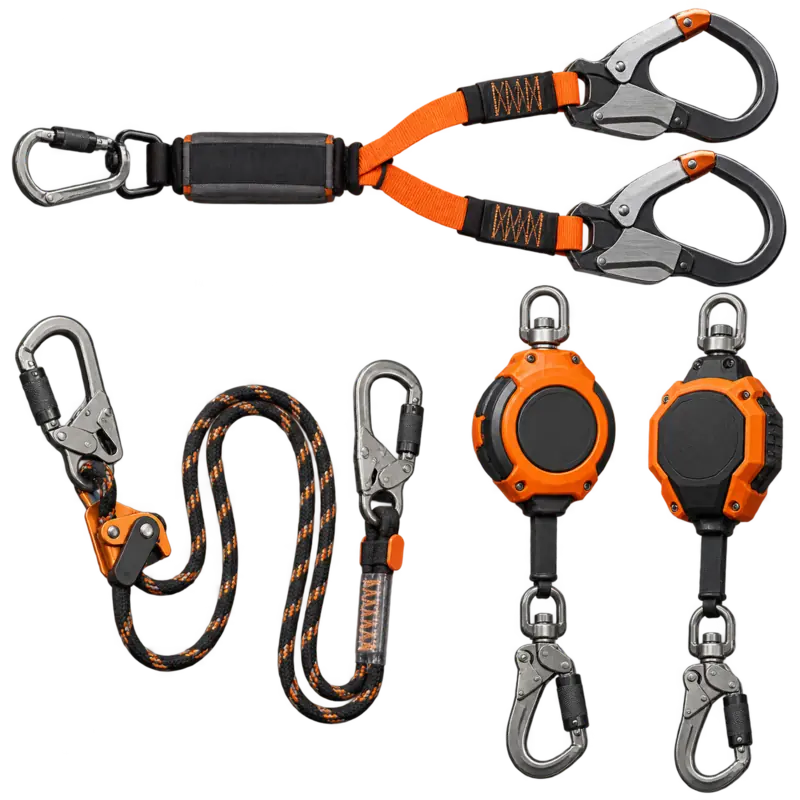
A practical directory for industrial plants, power generation, machinery installation, outages, repair work, rigging, fabrication, confined areas and elevated work. Use it to understand PPE categories—not to replace your employer's hazard assessment or site procedures.
Skip directly to a selection guide and its exact-product comparisons.
25 PPE groups
Ratings and certifications vary by exact manufacturer and model. Always verify current markings, instructions, certifications, limitations and workplace suitability before purchase or use.
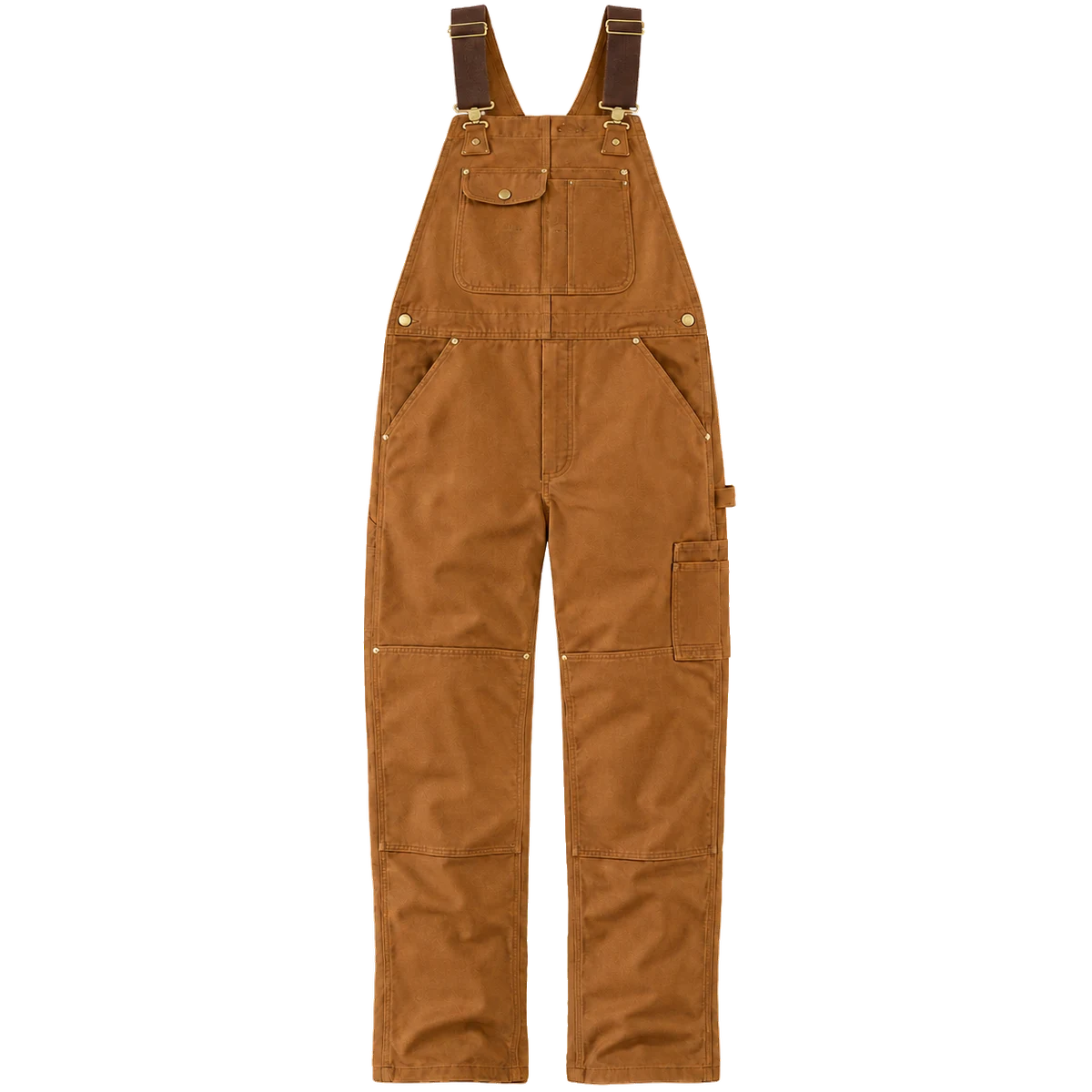
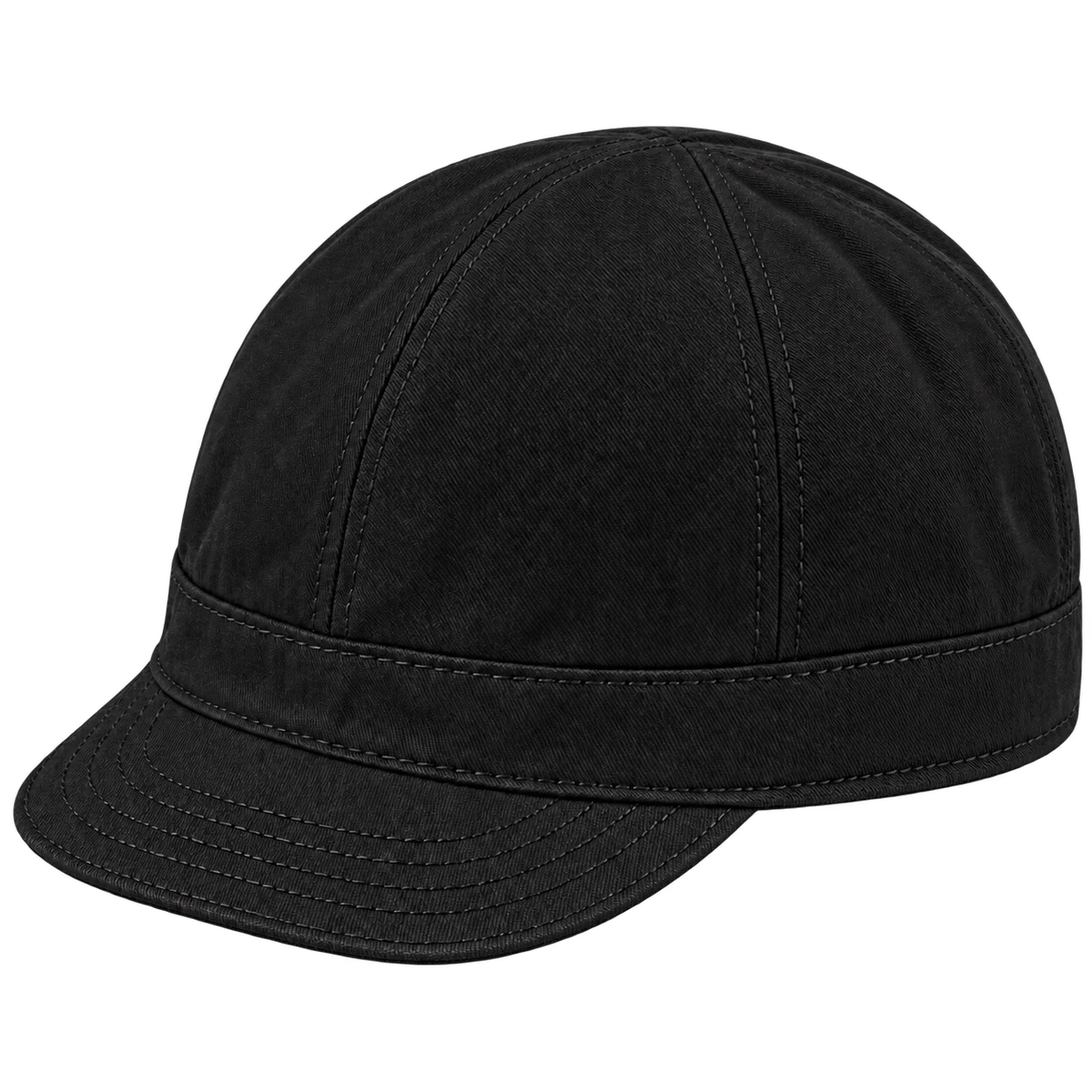
Recently added: 3 productsTillman gloves, Carhartt bibs and Comeaux welding cap
These are category guides, not endorsements of a particular product. Confirm manufacturer ratings and the requirements of your employer, site and task.
Head protection
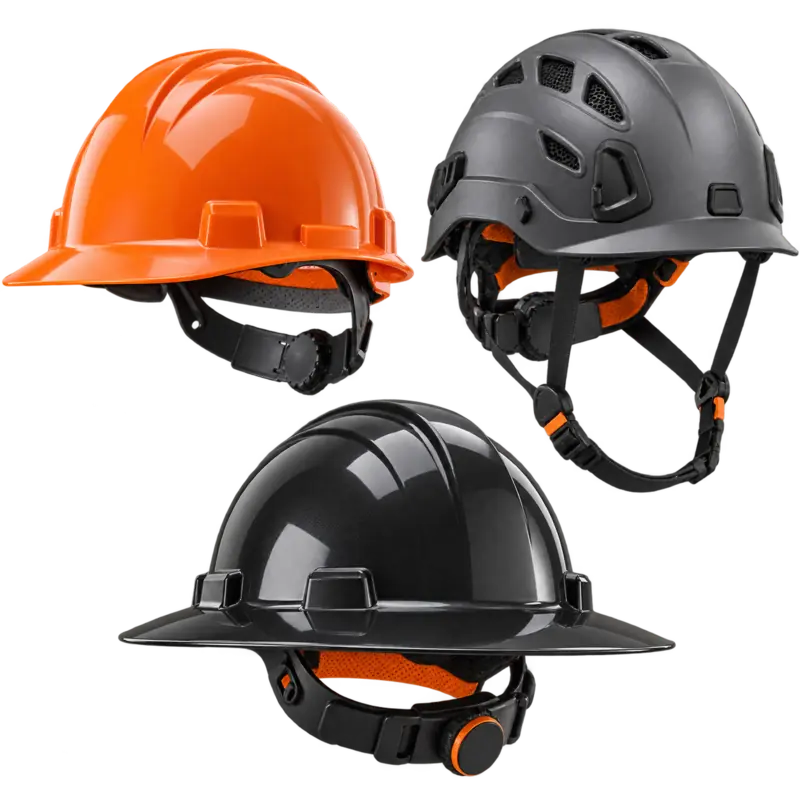
Industrial Hard Hat
Protective headgear intended to reduce specified head hazards when the chosen model, class and condition match the workplace requirement.
Protects against
Depending on its verified rating, impact/penetration hazards and potentially specified electrical hazards.
Millwright work
Plant access, construction, outages, rigging zones and machinery installation.
Types & ratings
Compare brim style, impact type and electrical class. Do not infer a rating from appearance—verify the exact manufacturer's markings and documentation.
Fit & comfort
Suspension adjustment, head size, balance, ventilation where allowed and clearance for eyewear/hearing PPE all matter.
Inspection & replacement
Inspect shell and suspension for cracks, dents, cuts, UV/heat damage, deformation and worn components. Follow manufacturer replacement criteria.
Compatibility
Use only approved accessories and verify fit with earmuffs, face shields, welding gear and other head-mounted PPE.
Buying considerations
Choose from employer/site requirements first, then consider weight, suspension, accessory system, service parts and climate.
Field note
A hard hat that rides poorly tends to get adjusted poorly. Correct suspension fit and compatible accessories help keep protection where it belongs.
Positioning note: Product grade, value, and price position are relative to comparable products in the same subcategory. They are not safety certifications, workplace approvals, or guarantees of protection.
Compare product options
Compare Industrial Hard Hat Options
Organize exact products by type when useful, then compare manufacturers, models, feature levels and intended applications. A subgroup is optional; no rating is implied by a group or option name.
Cap-Style Hard Hats
Compare the exact cap-style hard hats below by manufacturer, model, suspension, class and intended work environment.
Standard Cap-Style Hard Hat
MSA V-Gard Slotted Cap, White, with Fas-Trac III Suspension
Manufacturer
MSA
Model number
475358
Product type
Standard Cap-Style Hard Hat
Amazon
Coming soon
Product grade: Professional
Intended use
General industrial head protection
Best for
Plant and construction work requiring a traditional cap-style Type I hard hat after site selection.
View details & specifications
Value badge: Value PickPrice position: Lower
Why this gradeEstablished industrial cap-style platform with serviceable Fas-Trac III suspension and MSA accessory ecosystem.
Value assessmentThe low price and replaceable ratcheting suspension provide strong basic head-protection value when the specified class is suitable.
Main advantage0.661 lb published weight and Fas-Trac III ratchet suspension.
Main tradeoffExact electrical class is not stated on the exact part-number page reviewed.
Information last reviewed2026-08-24
Exact configuration
White cap-style hard hat; standard size; Fas-Trac III suspension
Manufacturer-confirmed standard / rating
ANSI/ISEA Z89.1-2014; MSA identifies the V-Gard cap family as Type I.
Brim style
Cap style
Ventilation / suspension
Non-vented family; Fas-Trac III ratchet suspension
Size / weight
Standard; 0.661 lb (0.300 kg)
Material
Polyethylene shell (V-Gard family)
Information last verified
2026-08-07
Unverified fields
Electrical class and suspension-point count not stated on the exact part-number page reviewed.
Field consideration: Exact electrical class is not stated on the exact part-number page reviewed.
Full-Brim Hard Hats
Use this optional subgroup for exact full-brim manufacturer-and-model listings once product data is verified.
Full-Brim Hard Hat
MSA V-Gard Slotted Full-Brim Hat, White, with Fas-Trac III Suspension
Manufacturer
MSA
Model number
475369
Product type
Full-Brim Hard Hat
Amazon
Coming soon
Product grade: Professional
Intended use
General industrial full-brim head protection
Best for
Plant, outdoor, and construction work where a full brim suits the site requirement.
View details & specifications
Value badge: Value PickPrice position: Lower
Why this gradeTraditional full-brim V-Gard industrial platform with replaceable suspension and broad MSA accessory support.
Value assessmentThe low price and replaceable ratcheting suspension provide strong basic head-protection value when the specified class is suitable.
Main advantageFull-brim polyethylene shell with Fas-Trac III suspension.
Main tradeoffExact electrical class is not stated on the exact part-number page reviewed.
Information last reviewed2026-08-24
Exact configuration
White full-brim hard hat; Fas-Trac III suspension
Manufacturer-confirmed standard / rating
ANSI/ISEA Z89.1-2014; MSA identifies V-Gard full-brim hats as Type I.
Brim style
Full brim
Ventilation / suspension
Non-vented family; Fas-Trac III suspension
Shell material
Polyethylene
Size / weight
Standard; 0.882 lb (0.400 kg)
Impact type
Type I (manufacturer family documentation)
Information last verified
2026-08-07
Unverified fields
Electrical class not stated on the exact part-number page reviewed.
Field consideration: Exact electrical class is not stated on the exact part-number page reviewed.
Type II Hard Hats
Place exact products here only after the exact model's current classification has been verified from manufacturer information.
Type II Lateral-Impact Hard Hat
Milwaukee Tool BOLT White Full Brim Vented Safety Helmet — Type 2, Class C
Manufacturer
Milwaukee Tool
Model number
48-73-1650
Product type
Type II Lateral-Impact Hard Hat
Amazon
Coming soon
Product grade: Specialty
Intended use
Type 2 industrial head protection
Best for
Worksites whose hazard assessment calls for manufacturer-documented Type 2, Class C head protection.
View details & specifications
Value badge: Value PickPrice position: Higher
Why this gradePurpose-built Type 2 safety helmet with side-impact classification, retention strap, and integrated BOLT accessory system.
Value assessmentThe premium is justified where Type 2 impact protection and the BOLT accessory platform are required by the hazard assessment.
Main advantageManufacturer explicitly identifies Type 2, Class C plus a chin strap and accessory slots.
Main tradeoffVented Class C configuration does not provide an electrical Class E claim.
Information last reviewed2026-08-24
Exact configuration
White; full brim; vented; ratcheting suspension and chin strap
Manufacturer-confirmed standard / rating
ANSI/ISEA Z89.1 Type 2, Class C; manufacturer also lists specified EN12492:2012 clauses.
Brim style
Full brim
Ventilation
Vented
Retention
Chin strap included
Accessory interface
BOLT system; six accessory slots shown by manufacturer
Information last verified
2026-08-07
Unverified fields
Exact published weight not established from the manufacturer page text reviewed.
Field consideration: Vented Class C configuration does not provide an electrical Class E claim.
Electrical-Class Hard Hats
Use only for exact models whose current electrical classification has been verified; shell appearance or ventilation alone never establishes a class.
Non-Vented Electrical-Class Hard Hat
Milwaukee Tool BOLT Yellow Full Brim Safety Helmet — Type 2, Class E
Manufacturer
Milwaukee Tool
Model number
48-73-1653
Product type
Non-Vented Electrical-Class Hard Hat
Amazon
Coming soon
Product grade: Specialty
Intended use
Type 2 Class E industrial head protection
Best for
Sites requiring this exact Type 2/Class E configuration after employer hazard assessment.
View details & specifications
Value badge: Value PickPrice position: Higher
Why this gradeSpecialized Type 2/Class E helmet combining lateral-impact classification with an unvented electrical-class configuration.
Value assessmentThe premium is justified where Type 2 impact protection and the BOLT accessory platform are required by the hazard assessment.
Main advantageManufacturer explicitly identifies Type 2, Class E and unvented configuration.
Main tradeoffClass E is a helmet classification, not permission to contact or work energized components.
Information last reviewed2026-08-24
Exact configuration
Yellow; full brim; unvented Class E safety helmet
Manufacturer-confirmed standard / rating
ANSI/ISEA Z89.1 Type 2, Class E.
Brim style
Full brim
Ventilation
Unvented
Electrical class
Class E
Impact type
Type 2
Information last verified
2026-08-07
Unverified fields
Exact published weight not established from the manufacturer page text reviewed.
Field consideration: Class E is a helmet classification, not permission to contact or work energized components.
Vented Hard Hats
A separate optional subgroup is available for verified vented models when ventilation is an important comparison point.
Vented Hot-Weather Hard Hat
Milwaukee Tool BOLT White Full Brim Vented Hard Hat with 4-Point Ratcheting Suspension
Manufacturer
Milwaukee Tool
Model number
48-73-1201
Product type
Vented Hot-Weather Hard Hat
Amazon
Coming soon
Product grade: Professional
Intended use
Warm-environment industrial head protection
Best for
General industrial work where a vented Class C configuration is permitted by the site.
View details & specifications
Value badge: Value PickPrice position: Moderate
Why this gradeProfessional vented Type 1 hard-hat platform with ratchet suspension and BOLT accessory interface.
Value assessmentThe price is reasonable for a full-brim ratcheting hard hat with accessory-system compatibility.
Main advantageVented shell and four-point ratcheting suspension support warm-environment wear.
Main tradeoffClass C vented configuration carries no Class E electrical-protection claim.
Information last reviewed2026-08-24
Exact configuration
White; full brim; vented; 4-point ratcheting suspension
Manufacturer-confirmed standard / rating
ANSI/ISEA Z89.1 Type 1, Class C.
Brim style
Full brim
Ventilation
Vented
Suspension
4-point ratcheting
Electrical class
Class C
Information last verified
2026-08-07
Unverified fields
Exact published weight not established from the manufacturer page text reviewed.
Field consideration: Class C vented configuration carries no Class E electrical-protection claim.
Comfort-Focused Hard Hats
Use this optional subgroup when comparing verified exact models with different suspension, padding, balance or long-shift usability features.
Premium Comfort-Suspension Hard Hat
Milwaukee Tool BOLT Black Full Brim Vented Hard Hat with 6-Point Ratcheting Suspension
Manufacturer
Milwaukee Tool
Model number
48-73-1231
Product type
Premium Comfort-Suspension Hard Hat
Amazon
Coming soon
Product grade: Premium
Intended use
Comfort-focused industrial head protection
Best for
Long shifts where a six-point suspension is preferred and a vented Class C helmet matches site requirements.
View details & specifications
Value badge: Value PickPrice position: Moderate
Why this gradeSix-point ratcheting suspension adds a meaningful comfort/fit distinction within a professional Type 1 hard-hat platform.
Value assessmentThe price is reasonable for a full-brim ratcheting hard hat with accessory-system compatibility.
Main advantageSix-point ratcheting suspension distributes support across more suspension points.
Main tradeoffPremium is editorial only; its Type 1/Class C protection classification is not higher because of the suspension.
Information last reviewed2026-08-24
Exact configuration
Black; full brim; vented; 6-point ratcheting suspension
Manufacturer-confirmed standard / rating
ANSI/ISEA Z89.1 Type 1, Class C.
Brim style
Full brim
Ventilation
Vented
Suspension
6-point ratcheting
Electrical class
Class C
Information last verified
2026-08-07
Unverified fields
Exact published weight not established from the manufacturer page text reviewed.
Field consideration: Premium is editorial only; its Type 1/Class C protection classification is not higher because of the suspension.
Eye protection
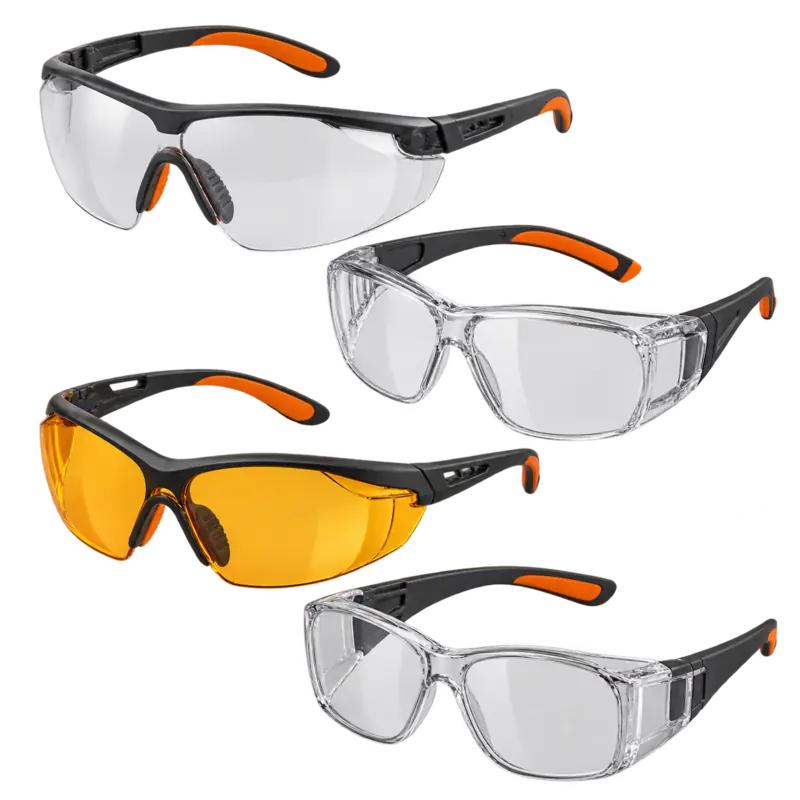
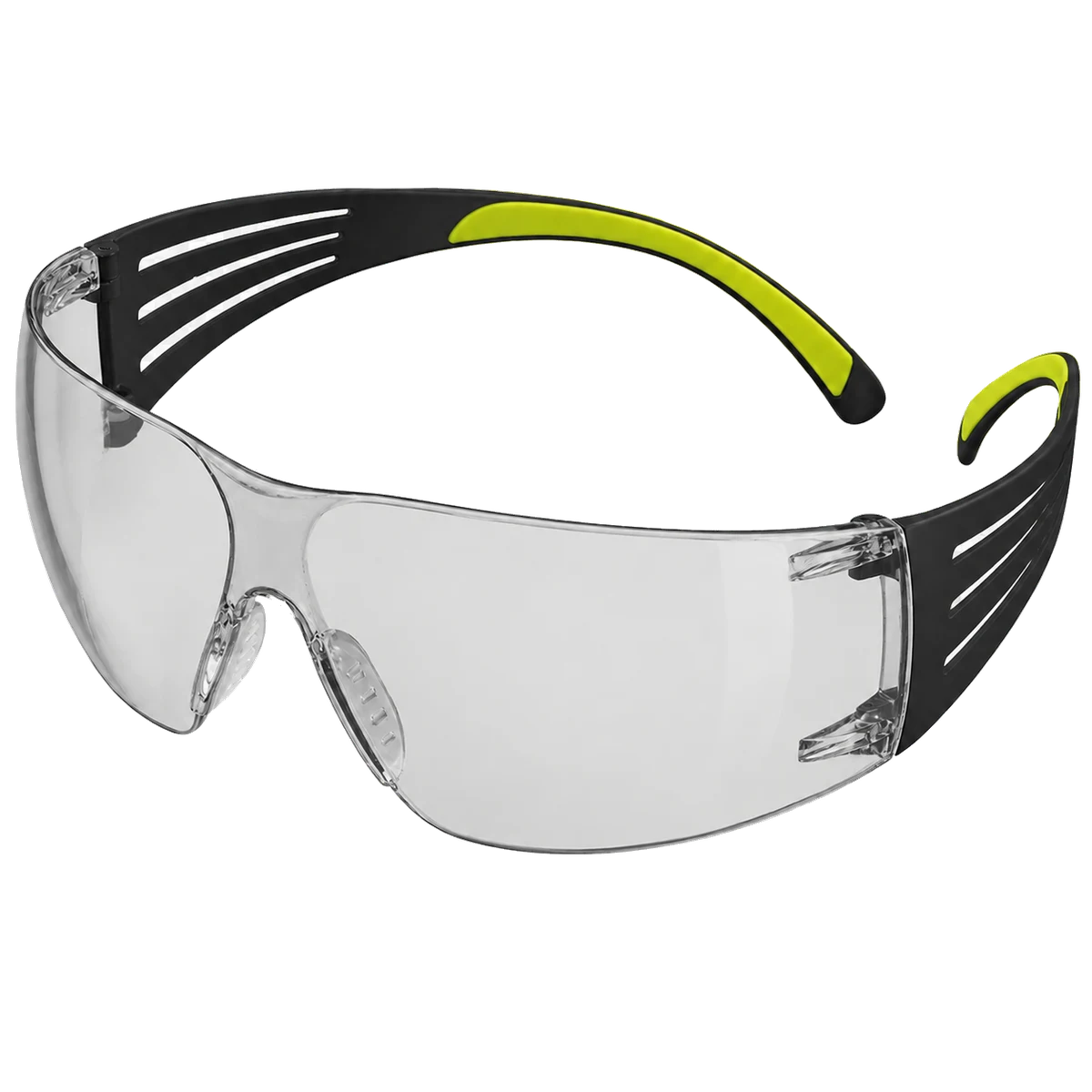
Anti-Fog Safety Glasses
Protective eyewear with an anti-fog treatment or design intended to maintain clearer vision during temperature, humidity and exertion changes.
Protects against
Hazards covered by the exact eyewear's verified rating; side coverage helps with flying particles.
Millwright work
Plant maintenance, drilling, inspection, fitting and general construction work.
Types & ratings
Compare lens markings, side protection, clear/tinted lens use and anti-fog design. Verify current manufacturer certification for the exact model.
Fit & comfort
Look for secure temple/nose fit without pressure points and enough clearance for prescription eyewear where needed.
Inspection & replacement
Clean as directed; replace lenses or eyewear that are deeply scratched, cracked, distorted, chemically attacked or no longer stay secure.
Compatibility
Must work with hard hats, respirators, hearing protection and face shields without breaking seals or dislodging protection.
Anti-fog performance matters only if the glasses stay on your face. Sweat, respirators and temperature swings expose weak lens treatments fast.
Compare product options
Compare Anti-Fog Safety Glasses Options
Use these generic formats to compare exact models after manufacturer information is confirmed.
Affiliate disclosure: Some Amazon links in this section are affiliate links. I may earn a commission from qualifying purchases at no additional cost to you. As an Amazon Associate I earn from qualifying purchases.
Clear Anti-Fog Safety Glasses
3M SecureFit 400 Series Safety Glasses, Clear Anti-Fog
Manufacturer
3M
Model number
SF401AF
Product type
Clear Anti-Fog Safety Glasses
Amazon
Link available
Product grade: Professional
Intended use
General industrial eye protection
Best for
General indoor plant work requiring clear safety eyewear after hazard assessment.
View details & specifications
Value badge: Value PickPrice position: Lower
Why this gradeIndustrial SecureFit platform pairs anti-fog/anti-scratch lens treatment with pressure-diffusion temples.
Value assessmentThe low unit price, anti-fog lens and self-adjusting temple design provide strong everyday eye-protection value.
Main advantageClear anti-fog/anti-scratch polycarbonate lens with wraparound coverage.
Main tradeoffAnti-fog treatment reduces fogging; it does not make eyewear fog-proof or replace goggles/face protection when required.
3M lists this exact stock item as SecureFit OTG anti-fog eyewear; ANSI/ISEA Z87.1 performance claims are family/configuration dependent.
Coating
3M Scotchgard Protector anti-fog
3M stock
B5005640012
UPC
00638060921388
Information last verified
2026-08-07
Unverified fields
Exact lens-material and current ANSI marking were not exposed in the exact U.S. product-page text reviewed; verify physical marking/current datasheet before procurement.
Field consideration: Fit over a particular prescription frame must still be checked; OTG eyewear does not replace goggles where goggles are required.
Face protection
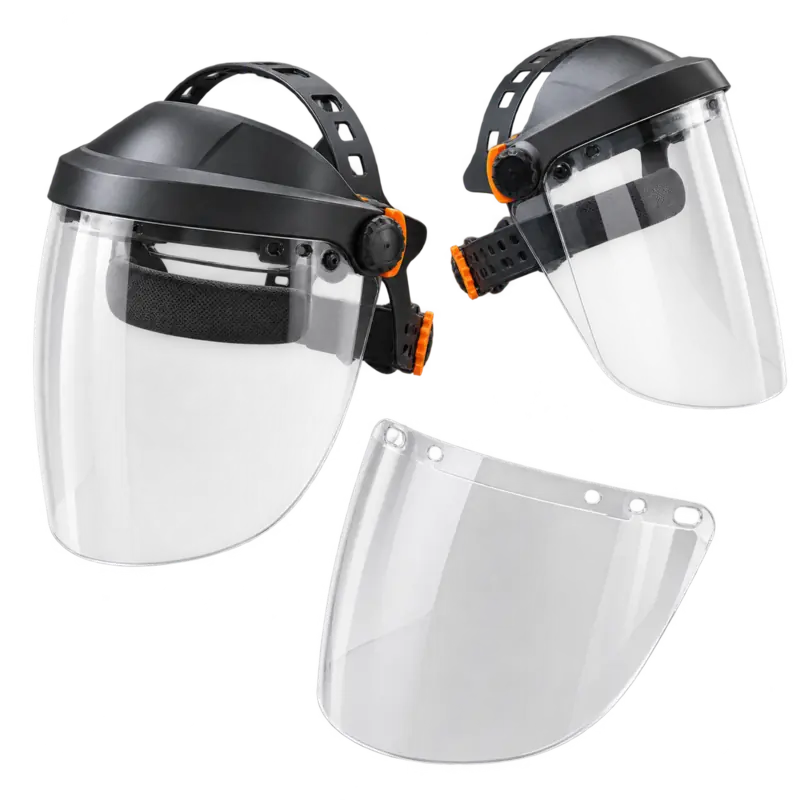
Full-Face Shield
A transparent face barrier used for hazards such as flying debris or splash when the shield's rating and configuration match the work.
Protects against
Specified face hazards according to its verified rating; a face shield normally supplements appropriate primary eye protection.
Millwright work
Grinding, cutting, chipping, wire-wheel work and some splash tasks as determined by the hazard assessment.
Types & materials
Compare headgear vs hard-hat mounting, visor material, coverage, shade where applicable and manufacturer ratings.
Fit & comfort
Check head clearance, pivot adjustment, viewing area, weight and whether the visor stays where positioned.
Inspection & replacement
Replace cracked, badly scratched, clouded, warped or chemically damaged visors and worn headgear components.
Compatibility
Confirm the assembly works with required safety glasses/goggles, hard hat, hearing protection and respirator.
Buying considerations
Match the hazard; favor clear viewing, easy approved lens replacement and a mounting system compatible with the rest of your PPE.
Field note
Don't treat a face shield as safety glasses with more coverage. For many jobs it is the second layer over proper primary eye protection.
Compare product options
Compare Full-Face Shield Options
Face-shield construction, visor material and approved uses differ by exact product.
General Grinding Face Shield
3M H8A Ratchet Headgear with WP96 Clear Polycarbonate Faceshield
Manufacturer
3M
Model number
82783-00000
Product type
General Grinding Face Shield
Amazon
Coming soon
Product grade: Professional
Intended use
General industrial face protection
Best for
Grinding and cutting tasks where this shield configuration matches the assessed hazard and primary eye protection is also used as required.
View details & specifications
Value badge: Value PickPrice position: Moderate
Why this gradeComplete manufacturer-defined headgear/shield kit intended for grinding, cutting, drilling, and demolition tasks.
Value assessmentThe combined ratchet headgear and clear shield provide practical reusable face protection at a reasonable price.
Main advantageComplete matched H8A/WP96 kit avoids mixing unrelated headgear and visor parts.
Main tradeoffFace shield supplements rather than automatically replaces required primary eye protection.
3M product matrix identifies WP96 polycarbonate visor as ANSI Z87.1-2015; kit 82783-00000 includes H8A + WP96.
Window
WP96 clear polycarbonate
Headgear
H8A ratchet headgear
Kit number
82783-00000
Use noted by manufacturer
Grinding, cutting, drilling and demolition
Information last verified
2026-08-07
Unverified fields
Exact visor dimensions were not established from the manufacturer excerpts reviewed.
Field consideration: Face shield supplements rather than automatically replaces required primary eye protection.
High-Heat Face Shield
Honeywell Fibre-Metal F400 High Performance Headgear with 4199GDTVGY Gold-Plated High-Heat Window
Manufacturer
Honeywell Fibre-Metal
Model number
F400 + 4199GDTVGY
Product type
High-Heat Face Shield
Amazon
Coming soon
Product grade: Specialty
Intended use
Specialized radiant/high-heat face shielding
Best for
Elevated-temperature/radiant-heat tasks only when this exact system is selected by the workplace hazard assessment.
View details & specifications
Value badge: Value PickPrice position: Higher
Why this gradeManufacturer support specifically identifies 4199GDTVGY for high-heat/blast-furnace application and Fibre-Metal documentation establishes compatible High Performance headgear.
Value assessmentThe premium gold-coated window is justified only for verified high-heat/radiant-energy work where its specialized protection is needed.
Main advantageHoneywell support explicitly identifies 4199GDTVGY as its offering for the high-heat application researched.
Main tradeoffSpecialized window/headgear still requires primary eye protection and task-specific heat/radiation selection.
Fibre-Metal High Performance windows documented to ANSI Z87.1+ and CSA Z94.3; support lists 4199GDTVGY temperature range -40°F to 240°F and melting point 310°F.
Window
4199GDTVGY gold-plated extended-view window
Headgear
F400 High Performance 4-in crown
Window size
19 in × 9.75 in (manufacturer support/distributor corroboration)
Temperature information
-40°F to 240°F operating range published by Honeywell support
Information last verified
2026-08-07
Unverified fields
Honeywell materials reviewed do not define a single packaged SKU containing both F400 and 4199GDTVGY; card intentionally identifies the exact two-part compatible assembly.
Field consideration: Specialized window/headgear still requires primary eye protection and task-specific heat/radiation selection.
Face Shield with Hard-Hat Adapter
Honeywell Fibre-Metal FM70 Hard-Hat Adapter with 4178CL High Performance Clear Window
Manufacturer
Honeywell Fibre-Metal
Model number
FM70 + 4178CL
Product type
Face Shield with Hard-Hat Adapter
Amazon
Coming soon
Product grade: Specialty
Intended use
Hard-hat-mounted industrial face protection
Best for
Tasks needing a compatible Fibre-Metal face shield mounted to an approved hard-hat system after compatibility verification.
View details & specifications
Value badge: Value PickPrice position: Moderate
Why this gradePurpose-specific Fibre-Metal hard-hat adapter configuration supports integrated head-and-face PPE without mixing unrelated mounting systems.
Value assessmentThe adapter and replaceable clear window offer good value for workers who already use compatible hard hats.
Main advantageManufacturer catalog identifies FM70 as a hard-hat adapter and 4178-series High Performance windows as part of the same system.
Main tradeoffHard-hat compatibility must be confirmed for the exact cap/hat and adapter; a face shield does not replace primary eye protection.
Information last reviewed2026-08-24
Exact configuration
Defined Fibre-Metal assembly: FM70 hard-hat adapter + 4178CL clear High Performance window
Manufacturer-confirmed standard / rating
Fibre-Metal High Performance windows documented to ANSI Z87.1+ and CSA Z94.3.
Adapter
FM70 hard-hat adapter
Window
4178CL clear High Performance window
Window material
Propionate (Fibre-Metal High Performance window family)
Compatibility
Use only within manufacturer-confirmed Fibre-Metal hard-hat/face-shield combinations
Information last verified
2026-08-07
Unverified fields
Exact complete-assembly weight was not published in the manufacturer sources reviewed.
Field consideration: Hard-hat compatibility must be confirmed for the exact cap/hat and adapter; a face shield does not replace primary eye protection.
Hearing protection
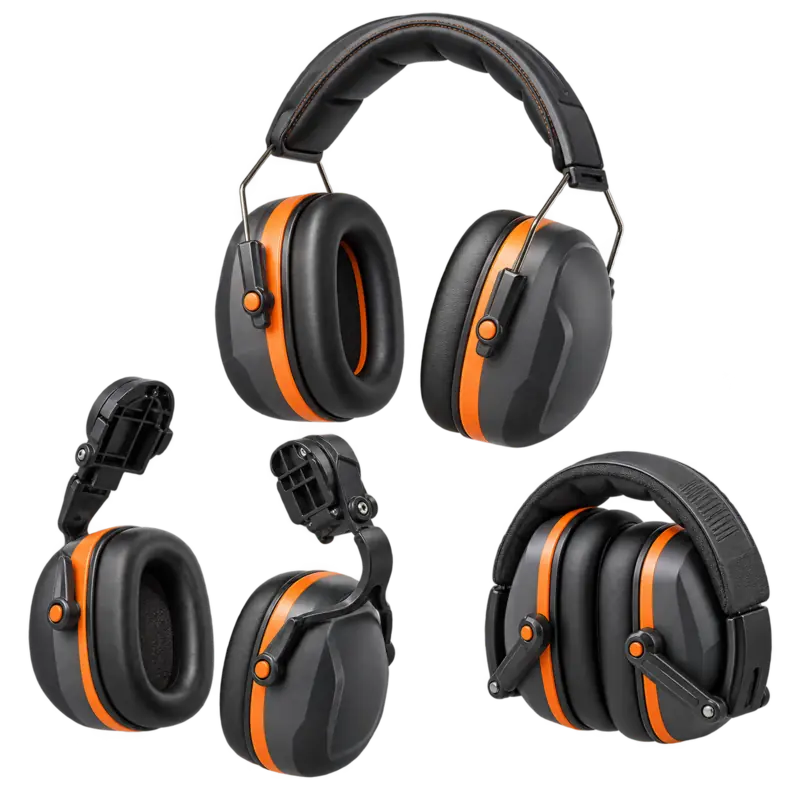
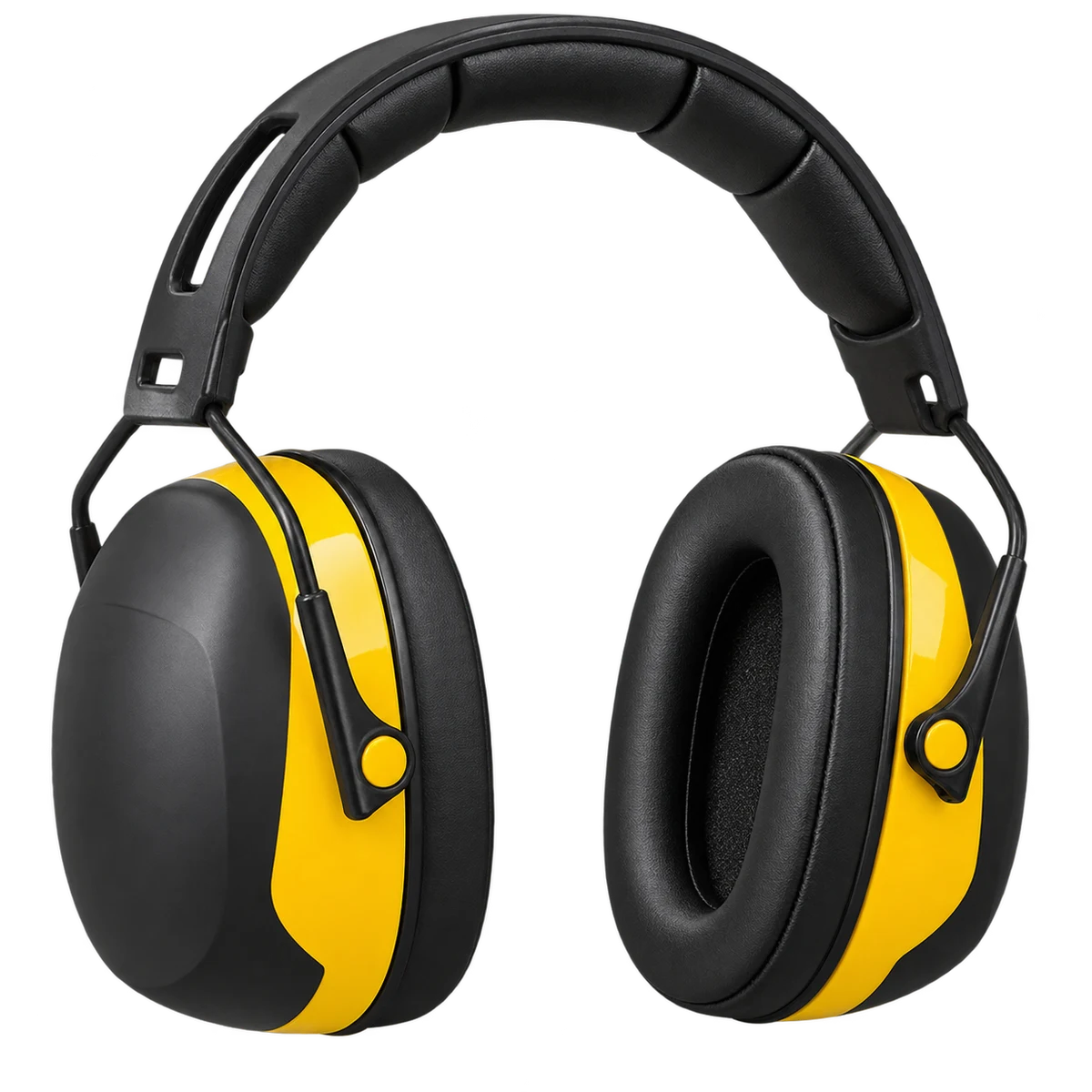
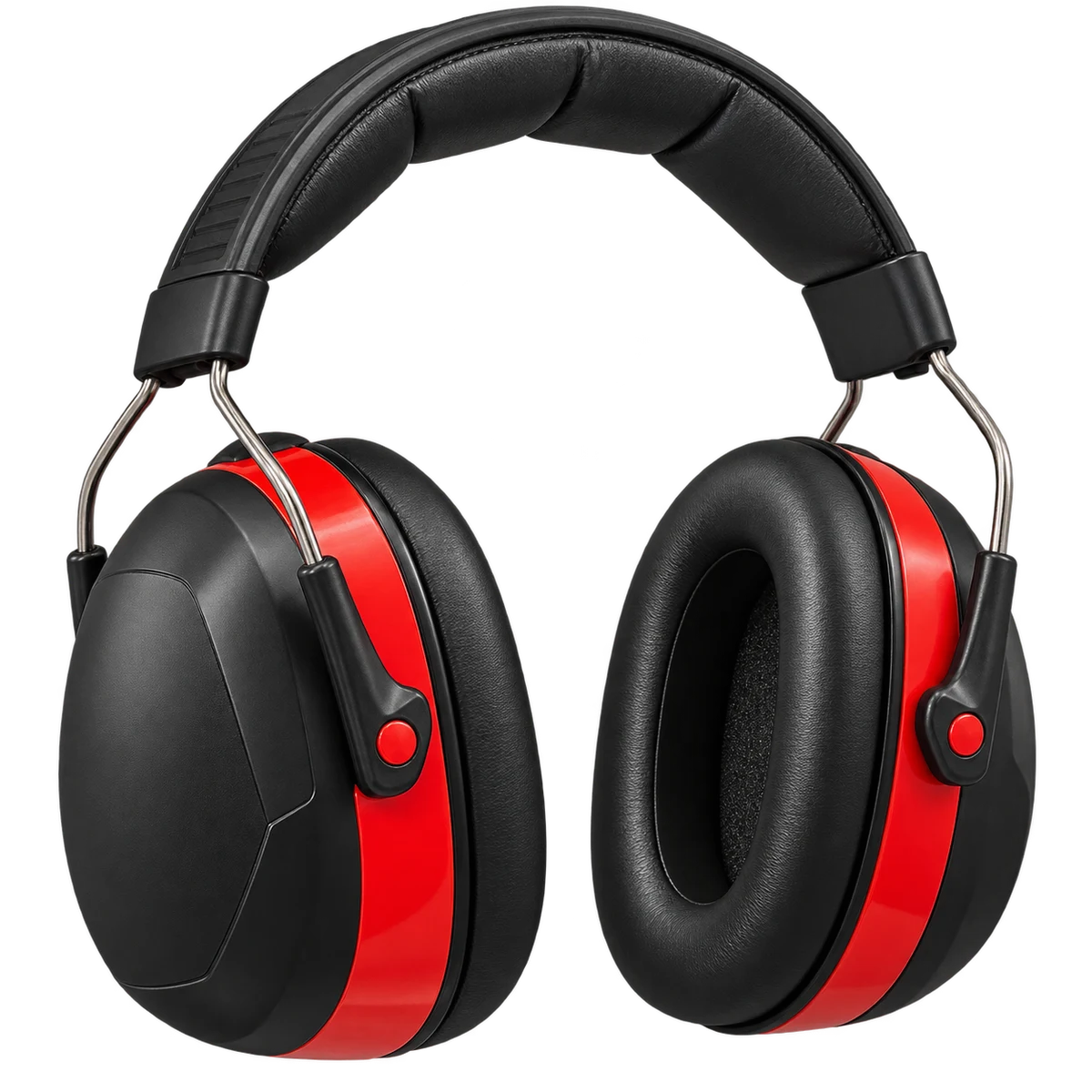
Reusable Hearing-Protection Earmuffs
Reusable ear-cup hearing protection selected as part of a hearing-conservation approach for the measured or assessed noise exposure.
Protects against
Noise exposure within the limits of the selected device and the workplace hearing-protection program.
Millwright work
Turbines, generators, compressors, grinding, impact work and noisy outage areas.
Ratings & design
Compare the manufacturer's current noise-reduction data, cup/seal construction and headband or hard-hat-mounted configuration.
Fit & comfort
Cushion pressure, eyewear temple interference, heat buildup and headband adjustment can affect the real seal and wear time.
Inspection & replacement
Check cushions, foam, cups, headband tension and attachment hardware; replace hardened, cracked or damaged parts per instructions.
Compatibility
Hard hats, glasses, face shields and respirator straps must not prevent a proper ear-cup seal.
Buying considerations
Select protection for the actual exposure; communication needs and overprotection concerns should be addressed through the site program.
Field note
A pencil, hood or thick glasses temple under the cushion can create a leak. The seal matters as much as the number on the package.
Compare product options
Compare Hearing-Protection Earmuff Options
Do not compare protection by appearance; exact noise-reduction data and fit must be verified for each model.
Affiliate disclosure: Some Amazon links in this section are affiliate links. I may earn a commission from qualifying purchases at no additional cost to you. As an Amazon Associate I earn from qualifying purchases.
Standard Earmuffs
3M PELTOR X Series Over-the-Head Earmuffs X2A
Manufacturer
3M PELTOR
Model number
X2A
Product type
Standard Earmuffs
Amazon
Link available
Product grade: Professional
Intended use
General industrial hearing protection
Best for
Noise environments where the hearing-conservation program selects an X2A and fit is verified.
View details & specifications
Value badge: Value PickPrice position: Moderate
Why this gradeSlim X-Series industrial earmuff with replaceable hygiene components and moderate-to-high published attenuation.
Value assessmentThe price is reasonable for a reputable reusable earmuff with practical attenuation for many industrial environments.
Main advantageSlim cup design with 24 dB published U.S. NRR.
Main tradeoffPublished NRR is not the attenuation every wearer will achieve; fit testing is strongly recommended by 3M.
Information last reviewed2026-08-24
Exact configuration
Over-the-head earmuff; 3M stock 7100314857
Manufacturer-confirmed standard / rating
NRR 24 dB; CSA Class A in 3M technical toolkit.
Mounting
Over-the-head headband
NRR
24 dB
3M stock
7100314857
Hygiene parts
X1/X2 compatible replacement hygiene kits available from 3M
Information last verified
2026-08-07
Unverified fields
Exact product weight not established from the U.S. manufacturer sources reviewed.
Field consideration: Published NRR is not the attenuation every wearer will achieve; fit testing is strongly recommended by 3M.
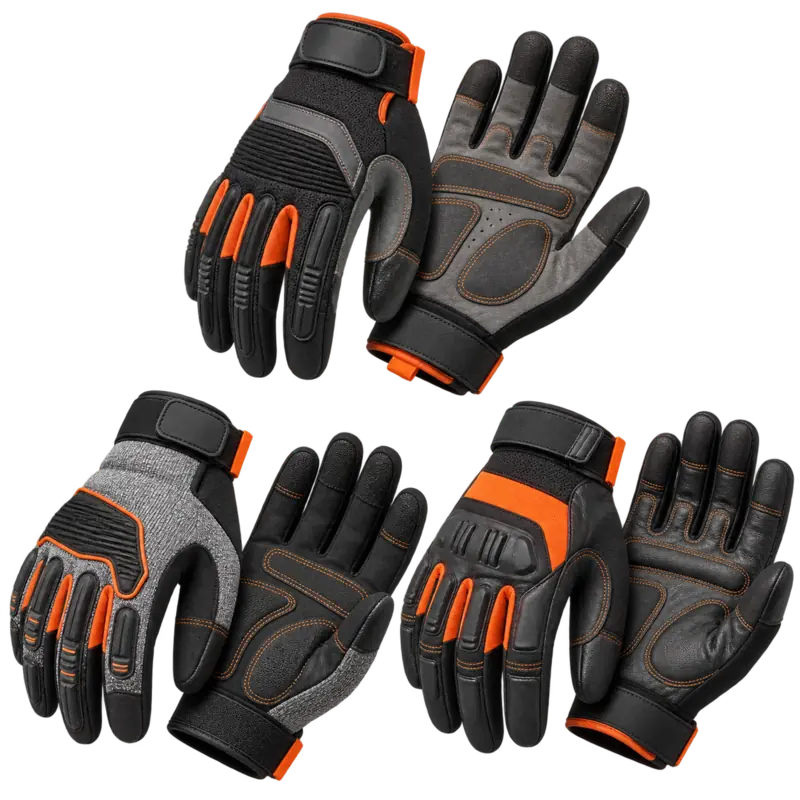
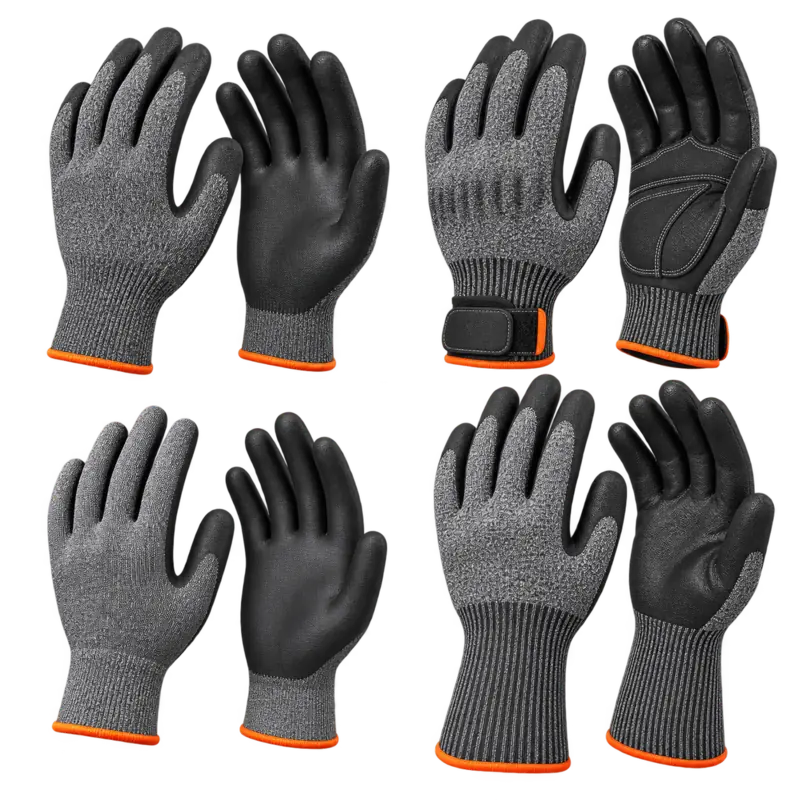
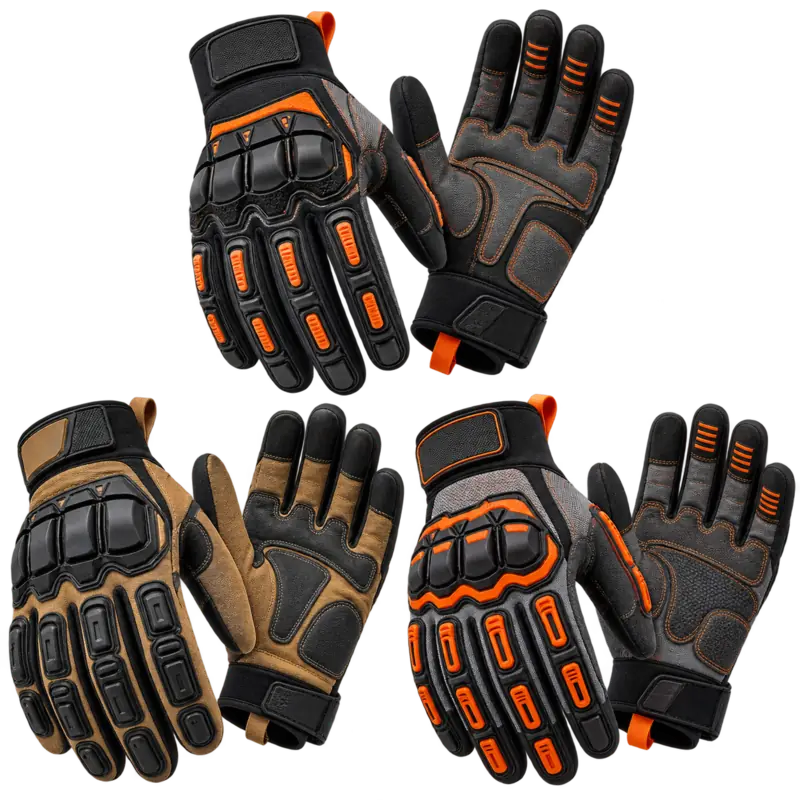
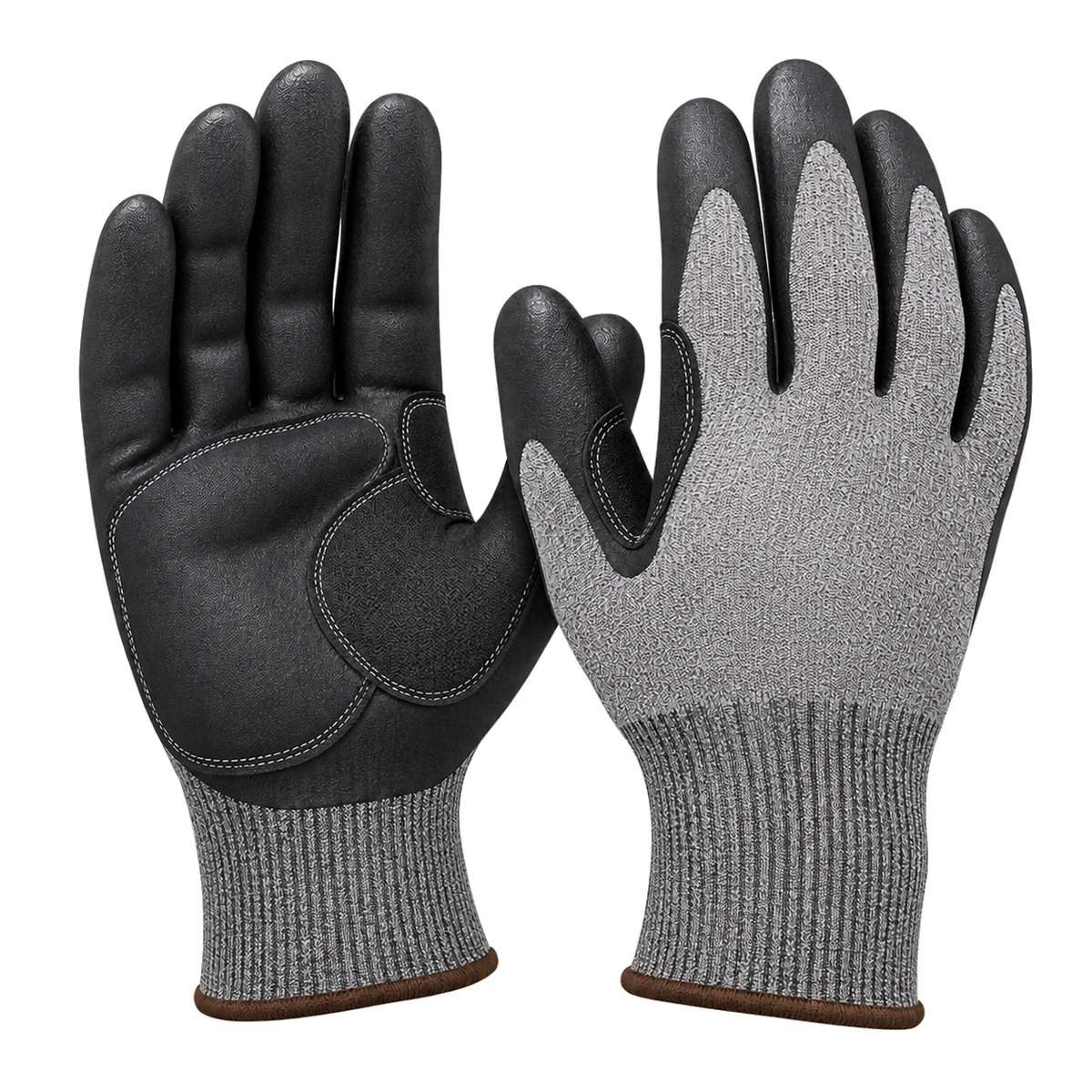
Gloves using cut-resistant fibers or constructions for tasks with identified cut hazards, selected for the specific exposure and required dexterity.
Protects against
Specified cut hazards according to the glove's verified test rating; not every cut-resistant glove protects from puncture, impact, chemical or heat hazards.
Millwright work
Handling sheet, sharp machined edges, blades, rigging hardware and fabrication materials when gloves are appropriate.
Ratings & materials
Compare current manufacturer test rating, coating, liner, grip, cuff and any additional impact or puncture claims.
Fit & comfort
Correct finger length, grip, dexterity, breathability and cuff style help prevent loose material around the work.
Inspection & replacement
Inspect for cuts, worn coating, holes, contamination and damaged seams. Retire when protective integrity is questionable.
Compatibility
Never let glove choice create an entanglement hazard around rotating equipment; follow machine/site rules.
Buying considerations
Match protection and grip to the material rather than choosing the highest rating regardless of task.
Field note
Gloves that help on sharp plate can be dangerous near rotating shafts or spindles. Stop and reassess before reaching anywhere near moving equipment.
Compare product options
Compare Cut-Resistant Work Glove Options
Cut, impact, grip and chemical performance are separate considerations and must be verified on the exact glove.
Affiliate disclosure: Some Amazon links in this section are affiliate links. I may earn a commission from qualifying purchases at no additional cost to you. As an Amazon Associate I earn from qualifying purchases.
General Cut-Resistant Gloves
Ansell HyFlex 11-541
Manufacturer
Ansell
Model number
11-541
Product type
General Cut-Resistant Gloves
Amazon
Link available
Product grade: Professional
Intended use
General sharp-part handling
Best for
Maintenance and handling of sharp or rough metal parts where this cut level and dexterity match the task assessment.
View details & specifications
Value badge: Value PickPrice position: Moderate
Why this gradeBalanced industrial cut glove with A4 cut classification, palm coating, and grip/durability features for sharp-part handling.
Value assessmentThe price is reasonable for verified A4 cut protection, strong abrasion performance and an 18-gauge high-dexterity construction.
Main advantageANSI/ISEA 105-2024 A4 cut rating with foam-nitrile palm coating and 18-gauge construction.
Main tradeoffCut resistance is not cut proof and does not by itself establish impact, chemical, or rotating-equipment suitability.
Information last reviewed2026-08-24
Exact configuration
Size 9; palm-coated foam nitrile; 18-gauge knit
Manufacturer-confirmed standard / rating
ANSI/ISEA 105-2024 Cut A4; EN 388:2016+A1:2018 4X21D; ANSI puncture level 3 published by Ansell.
Exact size represented
9 (available sizes 6–11)
Liner
Nylon, stainless steel, spandex, Kevlar
Coating
Foam nitrile; palm coated
Gauge
18
Information last verified
2026-08-07
Unverified fields
Size-specific order code beyond model 11-541 was not published on the manufacturer page reviewed.
Field consideration: Cut resistance is not cut proof and does not by itself establish impact, chemical, or rotating-equipment suitability.
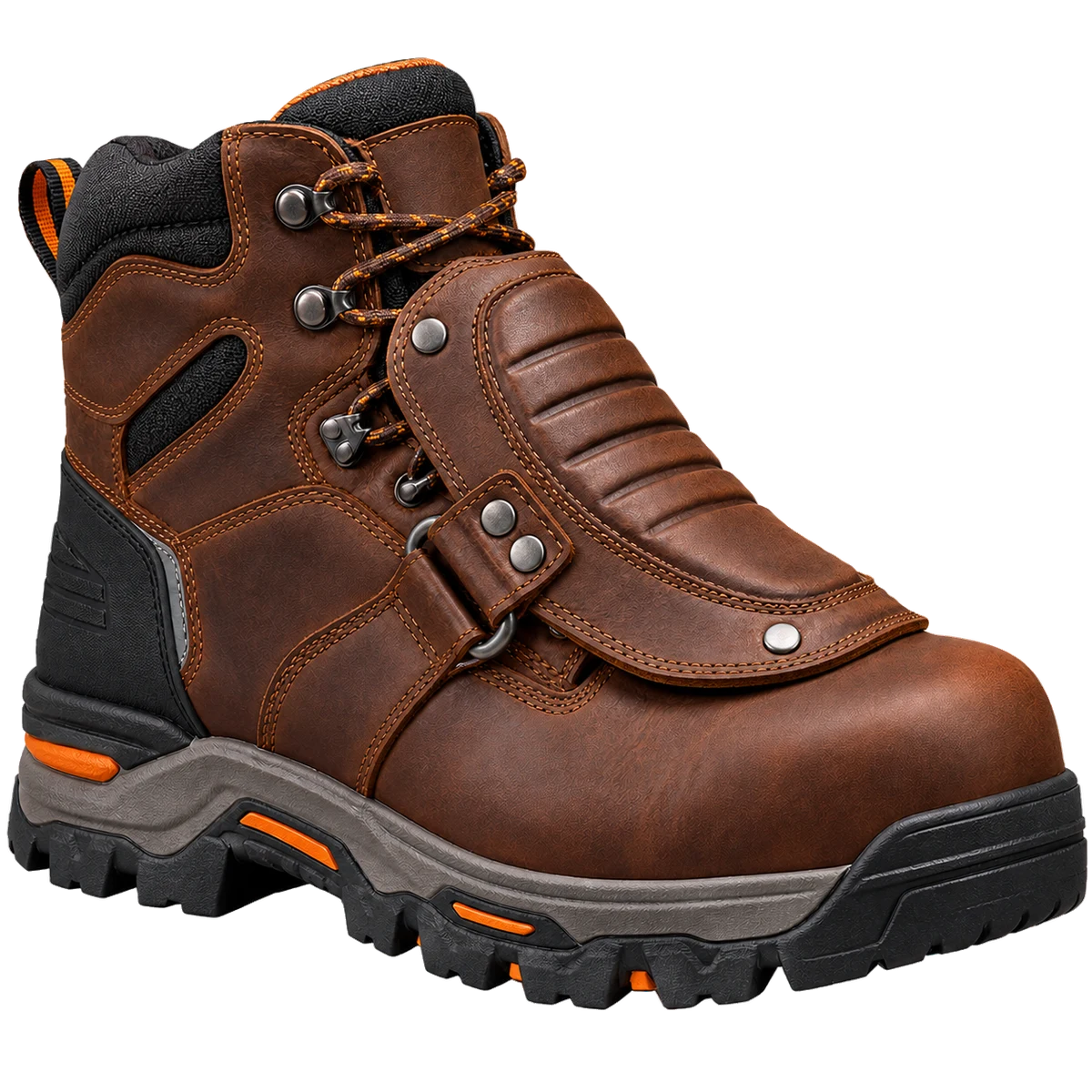
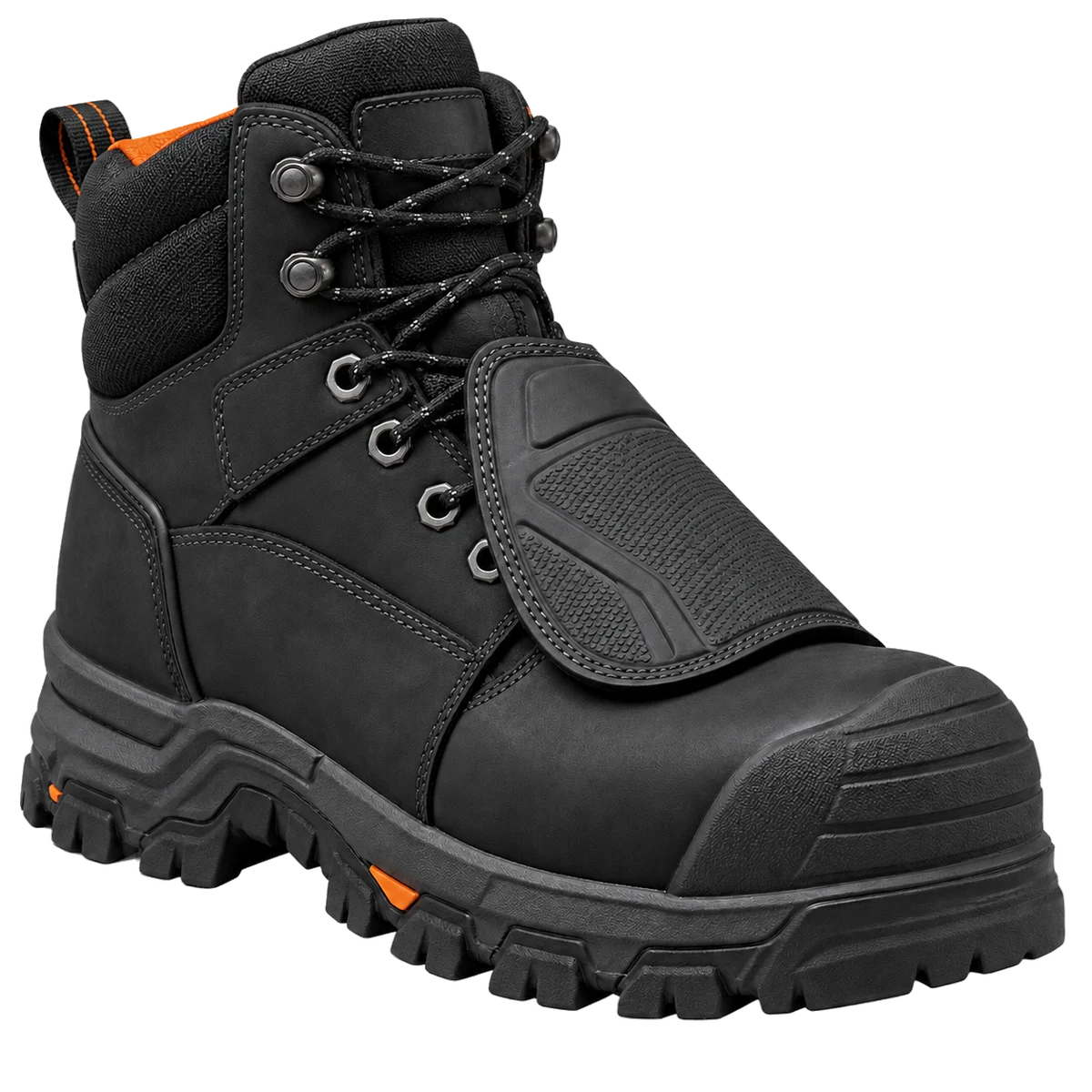
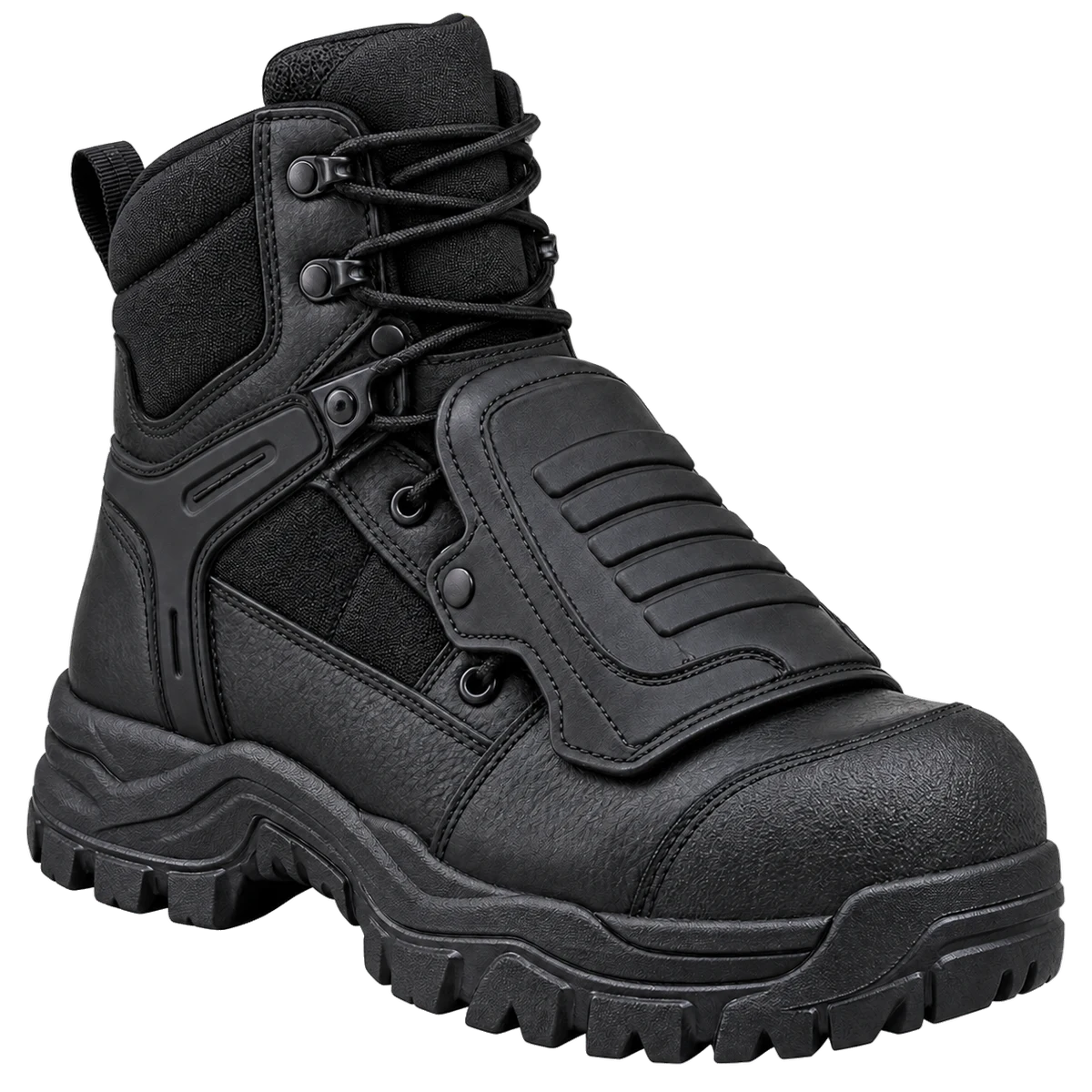
Work footwear incorporating additional protection over the metatarsal area, selected when hazards and workplace requirements call for it.
Protects against
Foot hazards covered by the exact boot's verified toe/metatarsal and other applicable ratings.
Millwright work
Heavy equipment handling, rigging areas, industrial construction and machinery installation where top-of-foot impact is a concern.
Types & materials
Compare internal/external met guards, safety-toe construction, sole, upper and any required electrical or slip-related claims—verify each from the manufacturer.
Fit & comfort
Heel hold, toe room, arch support, flex point, met-guard position and sock choice matter through a long shift.
Inspection & replacement
Inspect uppers, soles, separation, tread, exposed components and damage from significant impact or chemicals.
Compatibility
Boot height and shape should work with required gaiters, protective clothing and climbing equipment without restricting motion.
Buying considerations
Start with the required verified ratings, then fit, traction, durability, rebuildability and work environment.
Field note
A heavy boot that does not fit becomes a problem by hour ten. Try them with your work socks and account for swelling during long outage shifts.
Compare product options
Compare Metatarsal-Protection Work Boot Options
Toe, metatarsal, electrical and traction claims vary by exact boot; verify each independently.
Affiliate disclosure: Some Amazon links in this section are affiliate links. I may earn a commission from qualifying purchases at no additional cost to you. As an Amazon Associate I earn from qualifying purchases.
Internal Metatarsal Work Boots
Timberland PRO Men's Met Guard Steel Toe Work Boot
Manufacturer
Timberland PRO
Model number
TB150504214
Product type
Internal Metatarsal Work Boots
Amazon
Link available
Product grade: Professional
Intended use
Industrial metatarsal-footwear applications
Best for
Dry industrial work where an internal met guard and steel safety toe match the employer's footwear requirements.
View details & specifications
Value badge: Value PickPrice position: Moderate
Why this gradeIndustrial internal-metatarsal boot combines steel safety toe, internal anatomical met guard, and service-oriented Goodyear welt construction.
Value assessmentThe price is competitive for a met-guard steel-toe work boot intended for demanding industrial environments.
Main advantageInternal polyurethane/rubber metatarsal guard reduces external hardware bulk.
Main tradeoffThis card does not represent the waterproof model; EH is secondary protection and not permission for energized work.
Information last reviewed2026-08-24
Exact configuration
Brown leather; internal metatarsal guard; steel toe; size/width selected at order
Manufacturer-confirmed standard / rating
ASTM F2413 impact/compression and metatarsal (Mt) requirements; EH requirements per Timberland technical descriptions.
ASTM F2413 impact/compression and metatarsal (Mt) requirements; EH requirements; waterproof membrane also documented to ASTM F1671 for blood-borne pathogen resistance.
M/W 8–12 plus 13 and 14 (with half sizes through 11.5)
Information last verified
2026-08-07
Unverified fields
Exact boot weight not published on the manufacturer page reviewed.
Field consideration: Mid-height hiker format offers different support/coverage than an 8-in traditional work boot; waterproof is not chemical resistant.
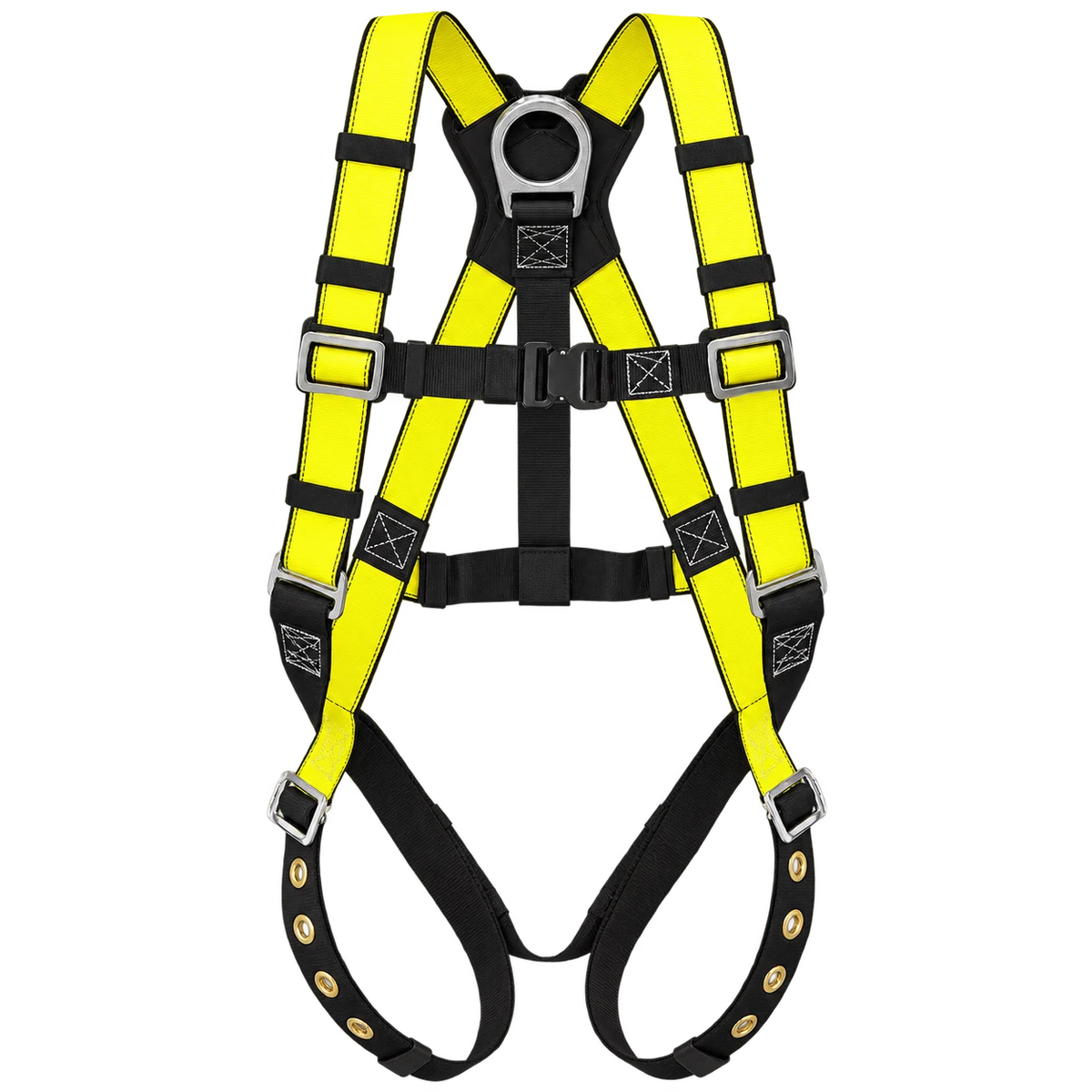
A body-support component used only as part of a properly selected, compatible fall-protection system with the required training and planning.
Protects against
Consequences of certain fall exposures when used within a complete system designed for the work; it does not prevent all falls or injuries.
Millwright work
Elevated structures, equipment platforms, turbine work and installation tasks where the employer's plan requires personal fall protection.
Types & ratings
Compare harness style, attachment points, user capacity, hardware and manufacturer system requirements. Verify every rating and approved use.
Fit & comfort
Correct sizing and adjustment at shoulders, chest and legs are essential; padding must not hide damage or interfere with required adjustment.
Inspection & replacement
Inspect webbing, stitching, labels, D-rings, buckles and connectors before use and at required intervals. Remove impacted or questionable gear from service.
Compatibility
Harness, connector, lanyard/SRL, anchorage and rescue plan must function as a complete compatible system.
Buying considerations
Employer program and system design come first; then assess adjustability, connector layout, weight, inspection visibility and manufacturer support.
Field note
The harness is only one link. Clearance, anchorage, connector type, rescue planning and training determine whether the whole system makes sense.
Compare product options
Compare Full-Body Fall-Arrest Harness Options
A harness is one component of a complete fall-protection system. Exact ratings, uses and compatible components must be confirmed.
Affiliate disclosure: Some Amazon links in this section are affiliate links. I may earn a commission from qualifying purchases at no additional cost to you. As an Amazon Associate I earn from qualifying purchases.
Basic Fall-Arrest Harness
Werner BaseWear Standard Back D-Ring Harness
Manufacturer
Werner
Model number
H412002
Product type
Basic Fall-Arrest Harness
Amazon
Link available
Product grade: General Purpose
Intended use
General fall-arrest body support
Best for
Basic fall-arrest systems where this exact harness fits the user and the complete employer-designed system.
View details & specifications
Value badge: Value PickPrice position: Lower
Why this gradeEntry-level full-body harness architecture with straightforward dorsal fall-arrest attachment and adjustability.
Value assessmentThe low price provides practical basic fall-arrest harness value when its configuration matches the approved system.
Main advantageSimple dorsal D-ring configuration keeps attachment purpose clear.
Main tradeoffHarness alone does not create an anchorage, connector, clearance plan, rescue plan, or complete fall-protection system.
Information last reviewed2026-08-24
Exact configuration
Universal-size standard back-D-ring harness
Manufacturer-confirmed standard / rating
ANSI Z359.11-2021; current Werner H4120 series data identifies the H412002 as a compliant Standard back-D-ring model.
Size
Universal
D-rings
Back/dorsal
Webbing
Polyester
Style
Standard: back D-ring
Information last verified
2026-08-07
Unverified fields
Exact harness weight and detailed post-fall retirement wording were not exposed in the page text reviewed; follow current Werner instructions.
Field consideration: Harness alone does not create an anchorage, connector, clearance plan, rescue plan, or complete fall-protection system.
Werner Blue Armor Construction Harness with Back and Hip D-Rings
Manufacturer
Werner
Model number
H133102
Product type
Construction-Style Harness
Amazon
Coming soon
Product grade: Professional
Intended use
Construction fall arrest with positioning features
Best for
Construction work where the complete plan separately uses the dorsal fall-arrest attachment and approved hip positioning attachments.
View details & specifications
Value badge: Value PickPrice position: Moderate
Why this gradeConstruction configuration adds hip positioning D-rings and quick-connect hardware beyond a basic dorsal-only harness.
Value assessmentThe price is reasonable for a construction harness with added hip D-rings and quick-connect hardware.
Main advantageBack and hip D-rings support distinct fall-arrest and positioning functions in one exact harness.
Main tradeoffHip D-rings are not interchangeable with the dorsal fall-arrest attachment and do not establish an anchorage.
Information last reviewed2026-08-24
Exact configuration
M/L; construction style; back + hip D-rings; quick-connect buckles
Manufacturer-confirmed standard / rating
ANSI Z359.11-2021; OSHA 29 CFR 1910.140 and 1926.502 listed by Werner.
Size
M/L
D-rings
Back + hip
Webbing
Polyester
Buckles
Quick connect chest and legs (series table)
Information last verified
2026-08-07
Unverified fields
Exact harness weight and post-fall retirement wording were not exposed in the page text reviewed; manufacturer instructions remain controlling.
Field consideration: Hip D-rings are not interchangeable with the dorsal fall-arrest attachment and do not establish an anchorage.
Positioning and Fall-Arrest Harness
Werner LITEFIT Climbing/Positioning Harness
Manufacturer
Werner
Model number
H362001
Product type
Positioning and Fall-Arrest Harness
Amazon
Coming soon
Product grade: Specialty
Intended use
Positioning/climbing plus fall-arrest body support
Best for
Trained at-height work where the employer's system uses the exact manufacturer-designated attachment for each function.
View details & specifications
Value badge: No Value PickPrice position: Higher
Why this gradeFour-attachment climbing/positioning architecture explicitly combines back, hip, and front D-rings for specialized at-height work.
Value assessmentThe climbing/positioning configuration is specialized, so its premium requires a defined approved work system and frequent use.
Main advantageManufacturer explicitly identifies hip positioning attachments plus dorsal and front connections on the exact model.
Main tradeoffD-ring functions are not interchangeable; harness selection does not establish anchorage, connector suitability, clearance, or rescue.
Information last reviewed2026-08-24
Exact configuration
Size S; back, hip and front D-rings
Manufacturer-confirmed standard / rating
ANSI Z359.11-2021; OSHA 29 CFR 1910.140 and 1926.502 listed by Werner.
Size
S
D-rings
Back, hip and front
Application
Climbing / positioning
Webbing
Polyester (series specification)
Information last verified
2026-08-07
Unverified fields
Exact harness weight and detailed fall-event retirement language were not exposed in the product-page text reviewed; follow current Werner instructions.
Field consideration: D-ring functions are not interchangeable; harness selection does not establish anchorage, connector suitability, clearance, or rescue.
Respiratory protection
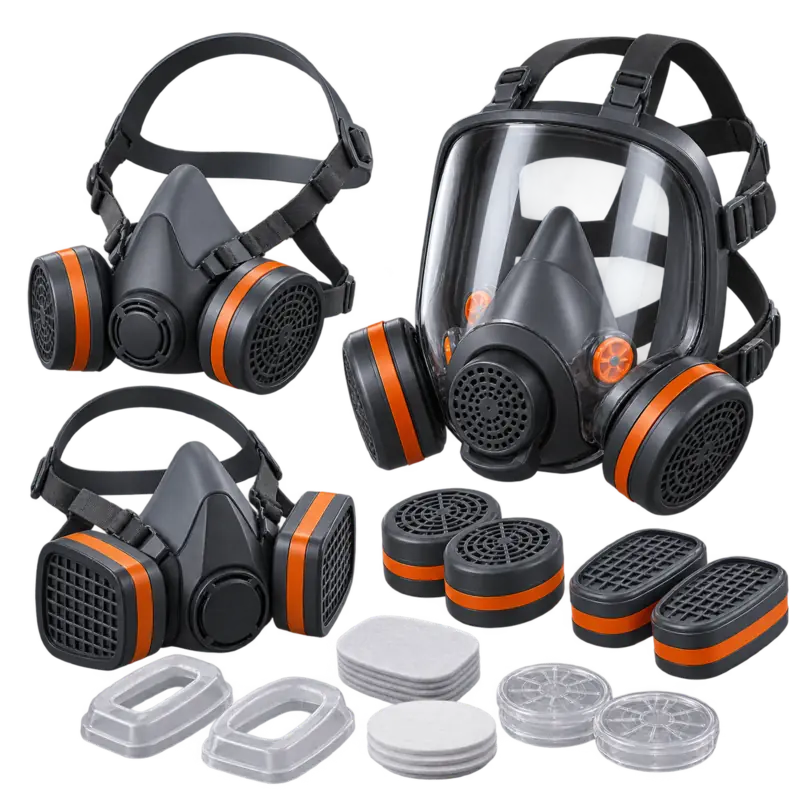
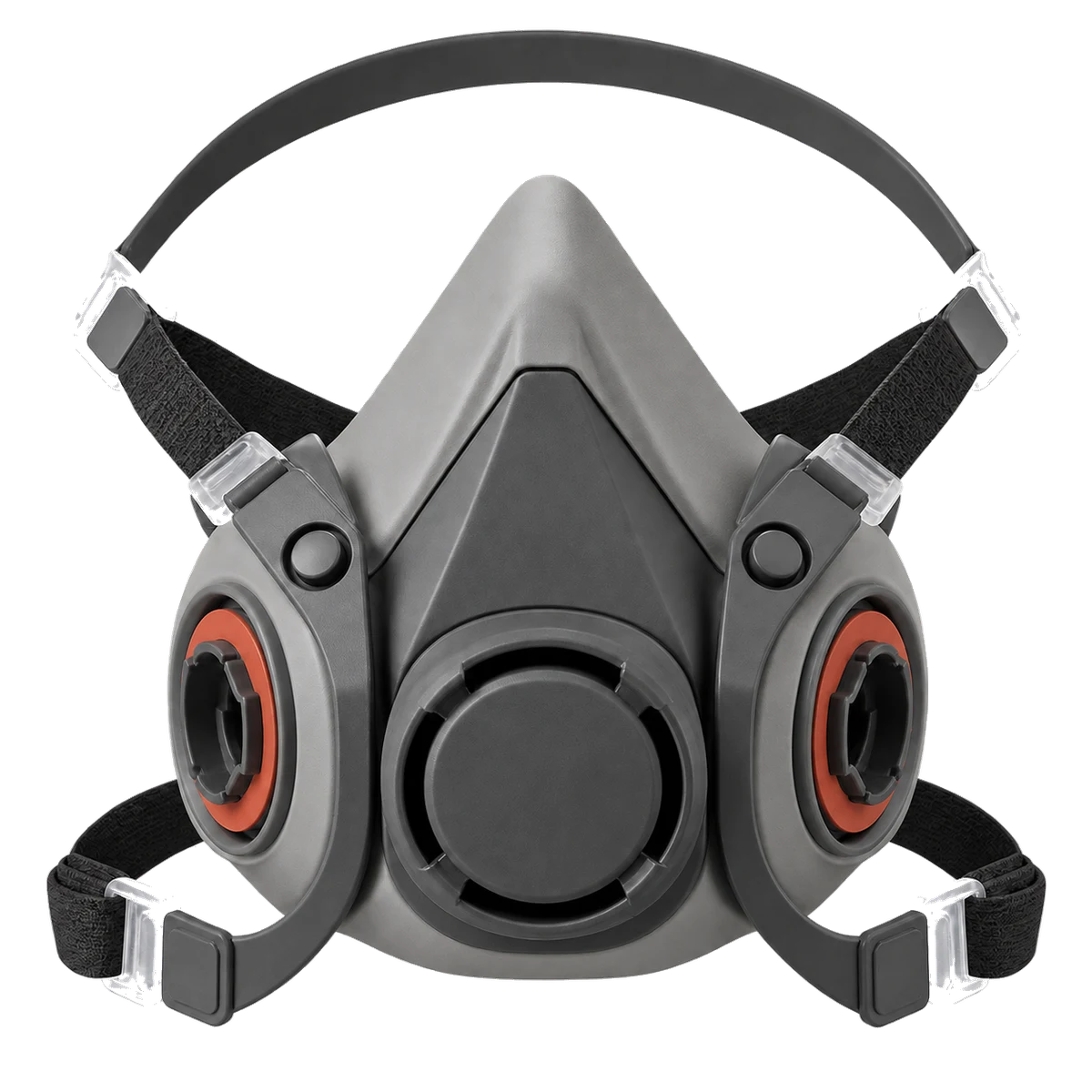
Reusable Half-Mask Respirator
A reusable facepiece that accepts contaminant-specific filters or cartridges as part of an employer respiratory-protection program.
Protects against
Only contaminants, concentrations and conditions addressed by the properly selected and approved filter/cartridge and respirator configuration.
Millwright work
Selected dust, fume, cleaning or maintenance exposures when the hazard assessment and respiratory program specify this type of respirator.
Types & ratings
Filter and cartridge families differ by contaminant. Verify respirator approval/configuration, cartridge selection and service-life information from current manufacturer/program documentation.
Fit & comfort
Correct size, seal and strap tension matter. Required medical evaluation, fit testing and training must be completed before workplace use.
Inspection & replacement
Inspect facepiece, valves, straps, seals and connections; replace filters/cartridges under the established change schedule or manufacturer instructions.
Compatibility
Eyewear, face shields and other PPE must not disturb the face seal. Facial hair or other interference can prevent an adequate seal.
Buying considerations
Do not select by mask alone. Identify the contaminant/exposure and program requirements first, then choose an approved compatible configuration.
Field note
Air-purifying respirators are not for oxygen-deficient or immediately dangerous atmospheres. Those conditions require a different, formally planned level of respiratory protection.
Compare product options
Compare Reusable Half-Mask Respirator Options
Facepiece style alone does not determine what a respirator protects against. Exact approved configurations and filters/cartridges must be verified.
Affiliate disclosure: Some Amazon links in this section are affiliate links. I may earn a commission from qualifying purchases at no additional cost to you. As an Amazon Associate I earn from qualifying purchases.
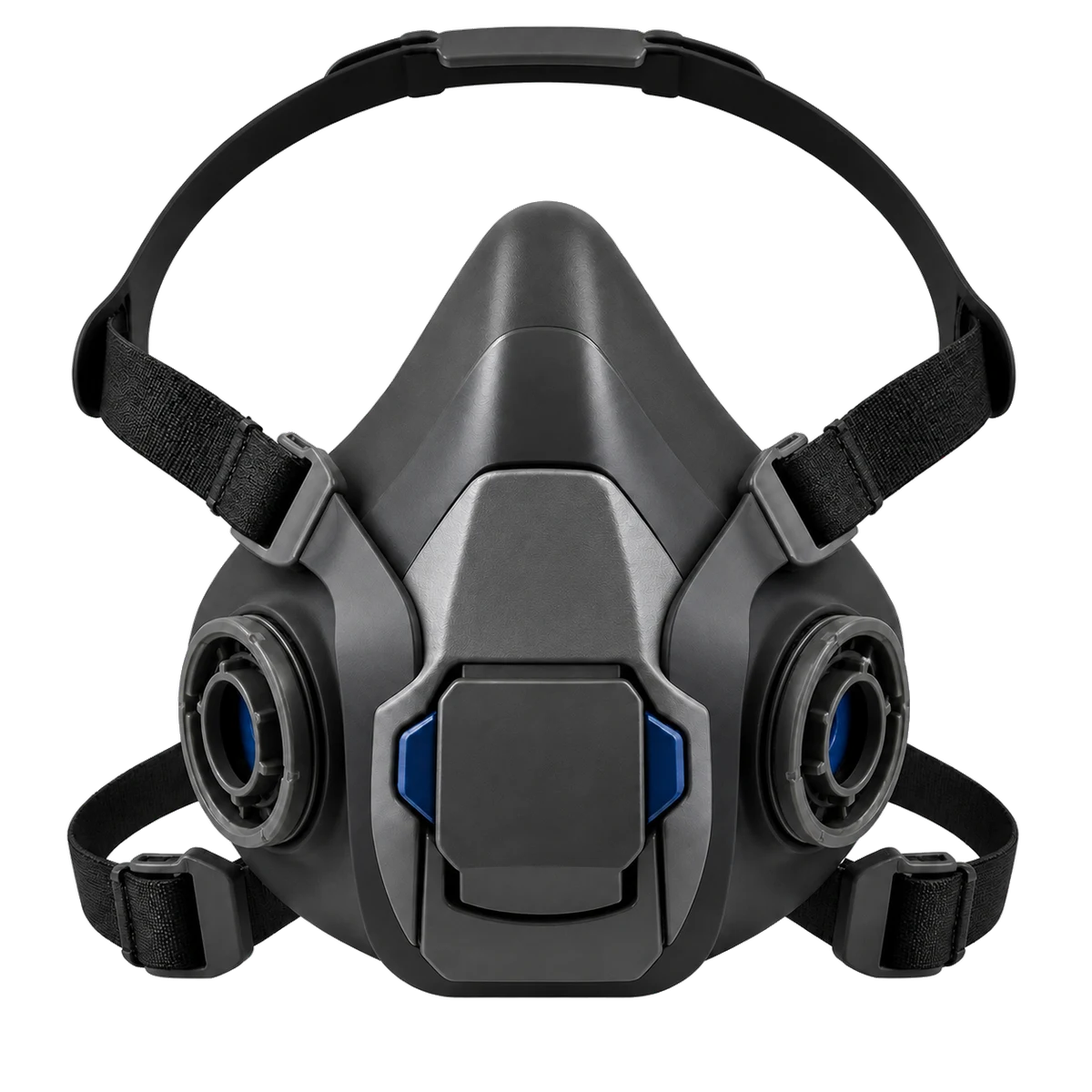
General Reusable Half-Mask Respirator
3M Half Facepiece Reusable Respirator 6000 Series
Manufacturer
3M
Model number
6200
Product type
General Reusable Half-Mask Respirator
Amazon
Link available
Product grade: General Purpose
Intended use
General respiratory-program facepiece
Best for
Programs needing a straightforward medium reusable half facepiece with exact approved cartridges/filters selected for the assessed exposure.
View details & specifications
Value badge: Value PickPrice position: Lower
Why this gradeSimple, lightweight, low-maintenance reusable facepiece with broad 3M bayonet filter/cartridge compatibility.
Value assessmentThe low facepiece price and broad cartridge compatibility make this a strong reusable-respirator value after proper fit testing.
Main advantageLightweight low-profile facepiece with broad 3M bayonet connection ecosystem.
Main tradeoffBare facepiece protects against no specific contaminant by itself; approved configuration, medical evaluation, fit testing, training, and change schedules may be required.
Information last reviewed2026-08-24
Exact configuration
Medium facepiece; thermoplastic/elastomeric family; bayonet connection
Manufacturer-confirmed standard / rating
NIOSH approval applies only to exact 3M-approved facepiece/filter/cartridge configurations; no bare-facepiece TC number or generic contaminant claim is presented.
Size
Medium
Material
Lightweight elastomeric facepiece
Connection
3M bayonet-style
Harness
Cradle head harness with adjustable straps
Information last verified
2026-08-07
Unverified fields
Specific NIOSH approval number is intentionally not stated because approval depends on the complete configured respirator.
Field consideration: Bare facepiece protects against no specific contaminant by itself; approved configuration, medical evaluation, fit testing, training, and change schedules may be required.
Industrial programs where low profile, Quick Latch operation, and this medium faceseal fit the wearer and other PPE.
View details & specifications
Value badge: Value PickPrice position: Moderate
Why this gradeRugged low-profile unibody design, silicone faceseal, Quick Latch, and serviceable valve/harness components suit industrial repeated use.
Value assessmentThe modest premium is justified by the quick-latch feature and more rugged silicone construction.
Main advantageLow-profile silicone construction with Quick Latch drop-down mechanism and downward-directed exhalation.
Main tradeoffLow profile does not guarantee PPE compatibility, fit, or contaminant protection; exact approved filters/cartridges remain exposure-specific.
NIOSH approval is configuration-specific; 3M documents the facepiece for use with compatible 3M bayonet filters/cartridges.
Size
Medium
Faceseal
Silicone
Harness
Four-point adjustable Quick Latch cradle
Connection
3M bayonet; compatible 3M filters/cartridges per manufacturer
Information last verified
2026-08-07
Unverified fields
Specific NIOSH TC approval number is intentionally not stated because approval depends on the complete configured respirator.
Field consideration: Low profile does not guarantee PPE compatibility, fit, or contaminant protection; exact approved filters/cartridges remain exposure-specific.
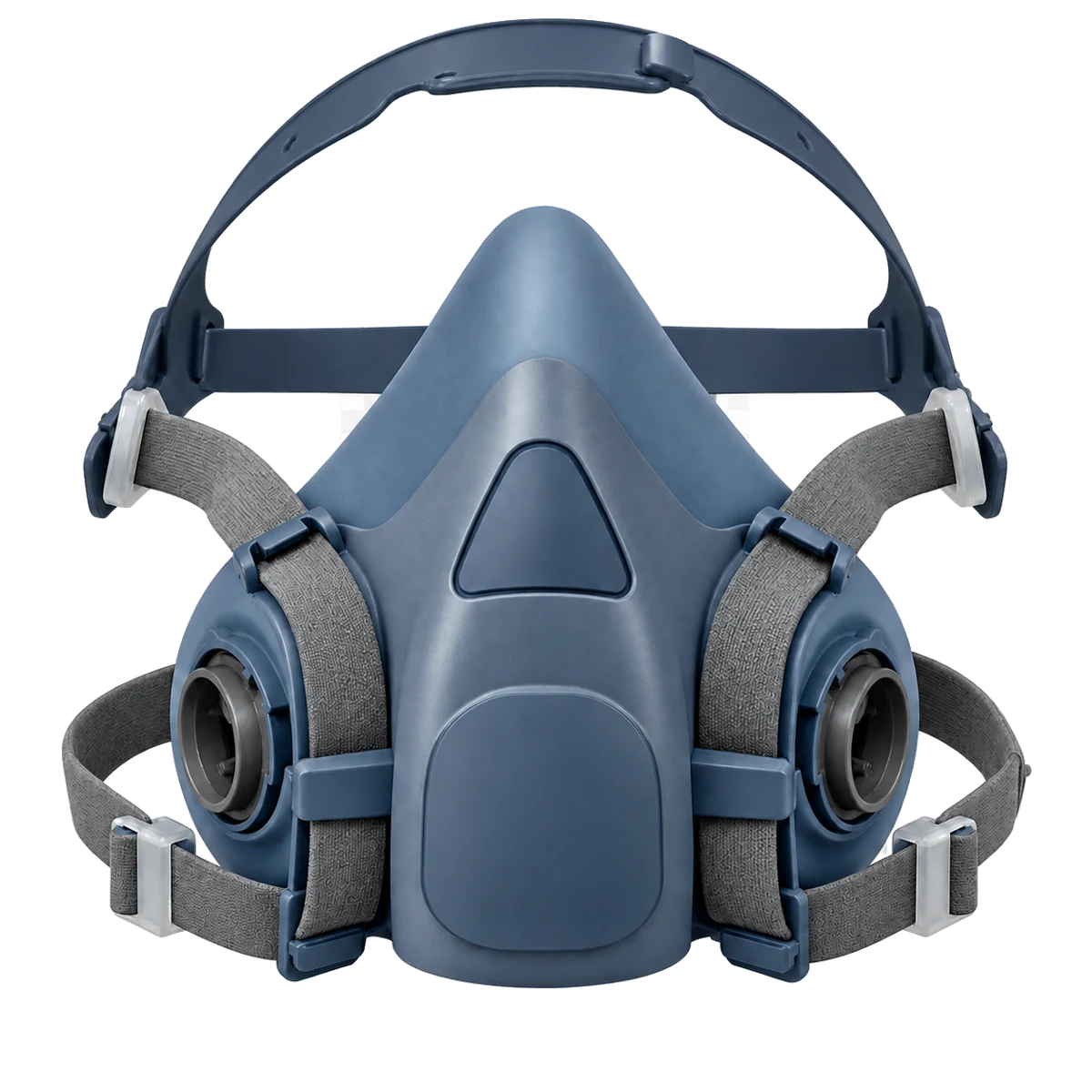
Longer-duration industrial wear when fit testing confirms this medium facepiece and the approved configuration matches the exposure.
View details & specifications
Value badge: Value PickPrice position: Moderate
Why this gradeSoft silicone seal, Cool Flow valve, replaceable parts, and dual-mode harness provide a clear comfort/serviceability step above basic reusable facepieces.
Value assessmentThe price is reasonable for a comfortable silicone facepiece suited to repeated wear after proper fit testing.
Main advantageSoft silicone faceseal, Cool Flow valve, and serviceable replacement parts support repeated use.
Main tradeoffComfort features do not replace the respiratory program, fit testing, medical evaluation, contaminant selection, or cartridge/filter management.
Information last reviewed2026-08-24
Exact configuration
Medium; soft silicone faceseal; Cool Flow valve; dual-mode/drop-down head harness
Manufacturer-confirmed standard / rating
NIOSH approval is configuration-specific; 3M states 7500 Series is NIOSH-approved with a wide variety of approved bayonet-style filters/cartridges.
Size
Medium
Faceseal
Soft silicone
Valve
3M Cool Flow exhalation valve
Connection
3M bayonet; compatible 2000/5000/7000 filters and 6000 cartridges per manufacturer
Information last verified
2026-08-07
Unverified fields
Specific NIOSH TC approval number is intentionally not stated because approval depends on the complete configured respirator.
Field consideration: Comfort features do not replace the respiratory program, fit testing, medical evaluation, contaminant selection, or cartridge/filter management.
Selection & safety reminder: Verify current manufacturer ratings, certifications and workplace-program requirements for the exact PPE. Match protection to the assessed hazard, inspect equipment before use, replace damaged or expired items as required, and follow manufacturer and employer procedures.
Verified additions
Workwear and Supplemental PPE
Exact owner-selected products added August 17, 2026.
Affiliate disclosure: Amazon links in this section are affiliate links. As an Amazon Associate I earn from qualifying purchases at no additional cost to you.
Gloves, bibs and welding cap
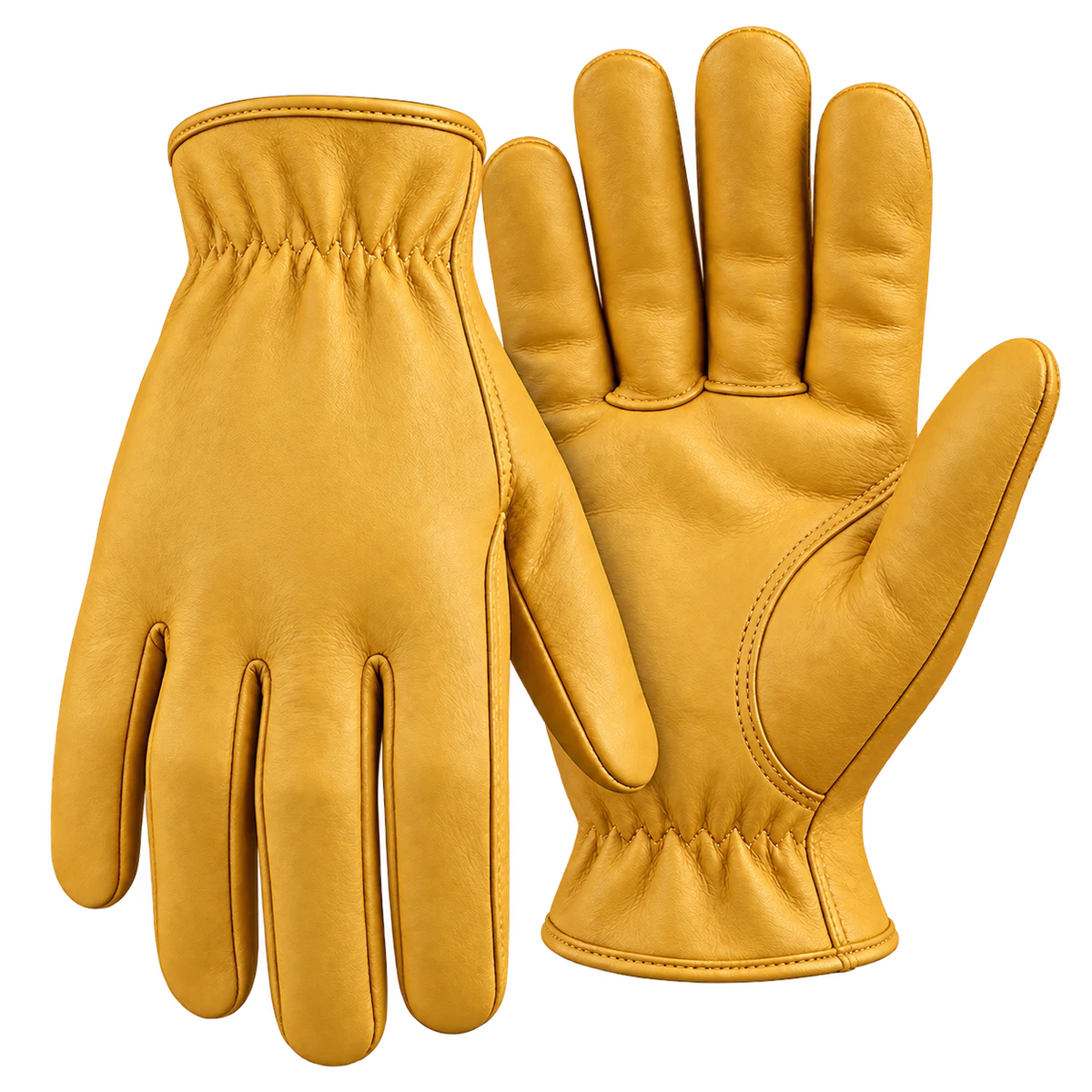
Top-grain goatskin drivers gloves
Tillman 1415L Goatskin Drivers Gloves, Large
Manufacturer
Tillman
Model
1415L
Product type
unlined leather drivers gloves
Amazon
Link available
Product grade: Professional
Intended use
general handling where leather gloves suit the assessment
Best for
General handling that benefits from soft goatskin and a keystone thumb.
View details & safety notes
Value badge: Value PickPrice position: Lower
Value assessmentThe low pair price and goatskin dexterity provide practical everyday material-handling value.
Safety note: Cut resistant does not mean cut proof. Gloves can create entanglement hazards around rotating machinery; follow the workplace hazard assessment.
Safety note: A soft cap is not a hard hat, impact protection, welding helmet, face protection or certified FR hood. Use only as a supplemental layer within the site PPE program.
These are PPE categories to consider after a formal workplace hazard assessment identifies the hazards and required controls.
General plant & construction workConsider required head, eye, hearing, hand, foot and high-visibility protection based on site rules and actual exposure.
Grinding & cuttingEye protection plus an appropriate face shield, hearing protection, task-appropriate gloves/clothing and other controls may be required.
Drilling & magnetic-drill workEye/face and hearing protection may apply; manage loose clothing and glove entanglement around rotating equipment.
Rigging & machinery movementHead, eye, hand and protective footwear may be considered along with exclusion zones and the lift plan.
Elevated work & fall exposureSite-approved restraint or arrest systems may be required with compatible harness, connectors, anchorage, clearance and rescue planning.
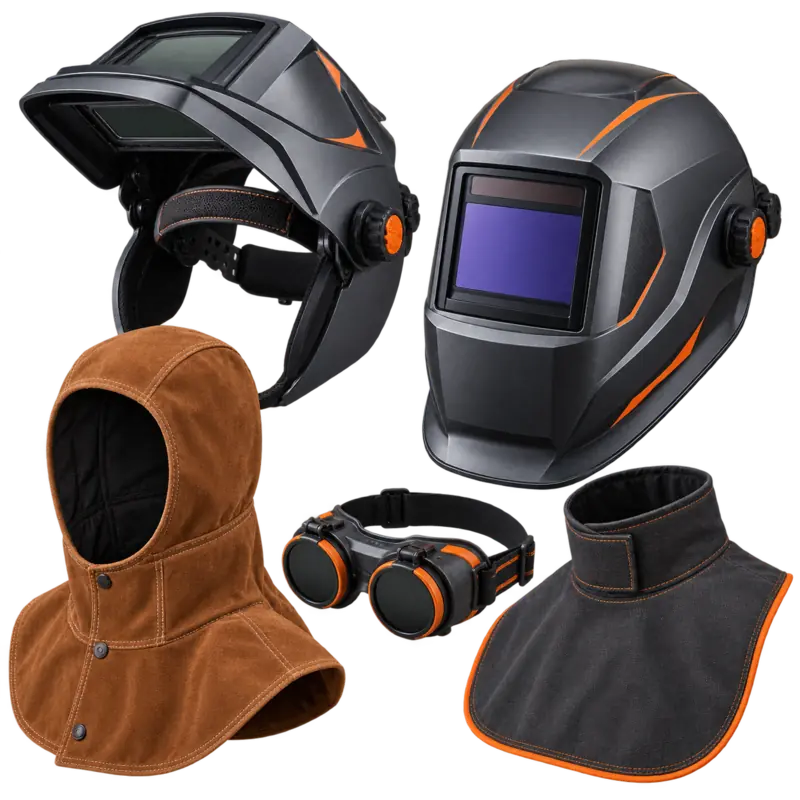
Welding & hot workAppropriate welding eye/face protection, heat-resistant gloves and protective clothing may be required; hot-work controls remain essential.
Chemical cleaning & degreasingChemical-compatible gloves, eye/face protection, clothing and possibly respiratory protection depend on the product and exposure assessment.
High-noise turbine & machinery workHearing protection must be selected for the assessed exposure and worn correctly; dual protection may be required by the program.
Electrical & arc-flash exposureUse only PPE specifically selected under the employer's electrical safety program and hazard assessment; verify all current ratings.
Dust, fumes & airborne contaminantsEngineering controls come first where feasible; any respirator must match the identified contaminant, exposure and respiratory program.
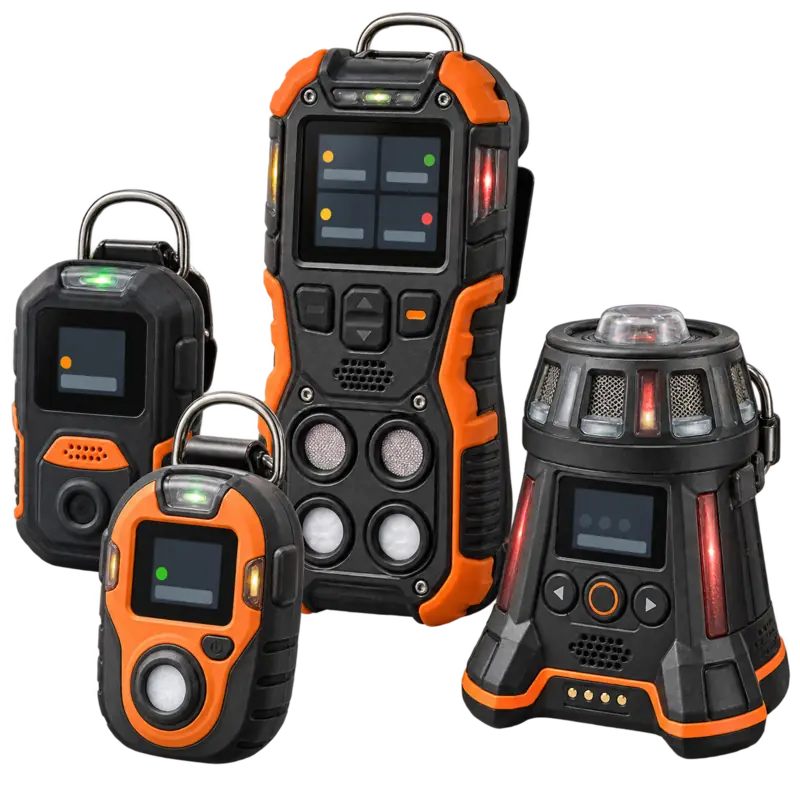
Confined-space & restricted-area workEntry procedures, atmospheric testing, communications and rescue provisions govern; PPE and gas detection must match the permit/program.
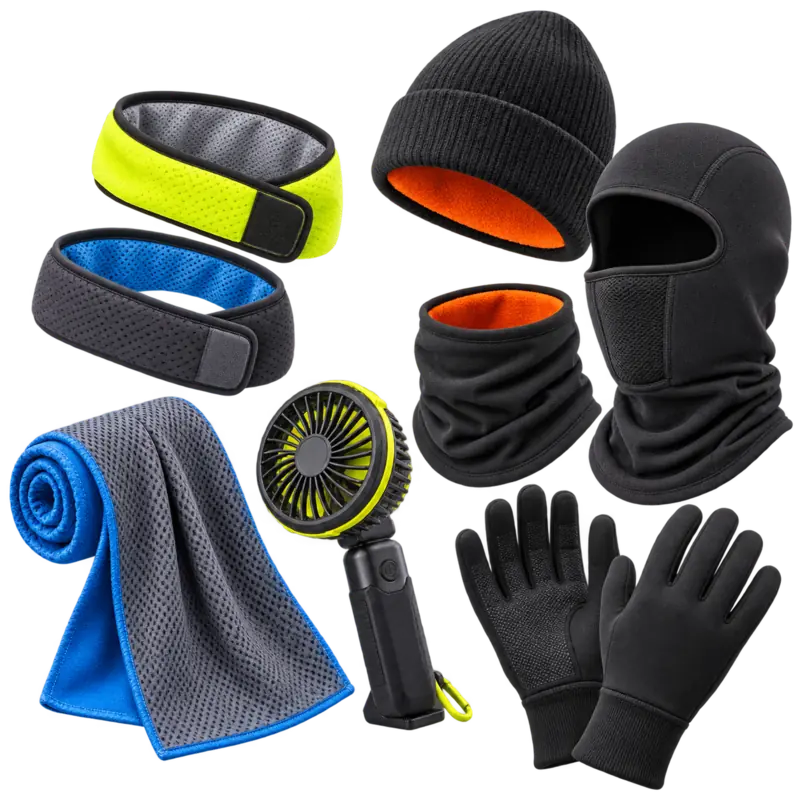
Outdoor heat, cold & weather exposureWeather-appropriate clothing, hydration/cooling or cold protection, traction and visibility may be part of the site plan.
This page is not a site-specific PPE determination.
Hazards can combine and change. Employer requirements, site procedures, manufacturer instructions and applicable safety regulations determine what is actually required.
PPE selection
Know what changes from one option to another
More PPE is not automatically better if equipment interferes with fit, visibility, hearing, movement, seals or compatibility.
Safety glasses, goggles & face shields
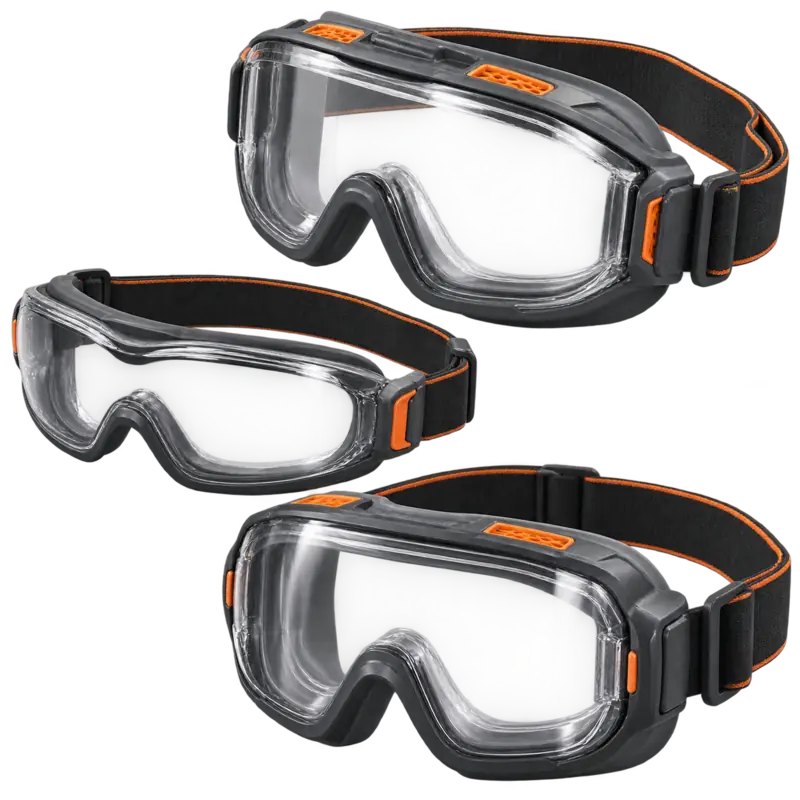
Glasses provide primary eye protection for specified hazards; goggles can add enclosure for certain dust/splash exposures; face shields protect more of the face and normally supplement appropriate eye protection.
Earplugs & earmuffs
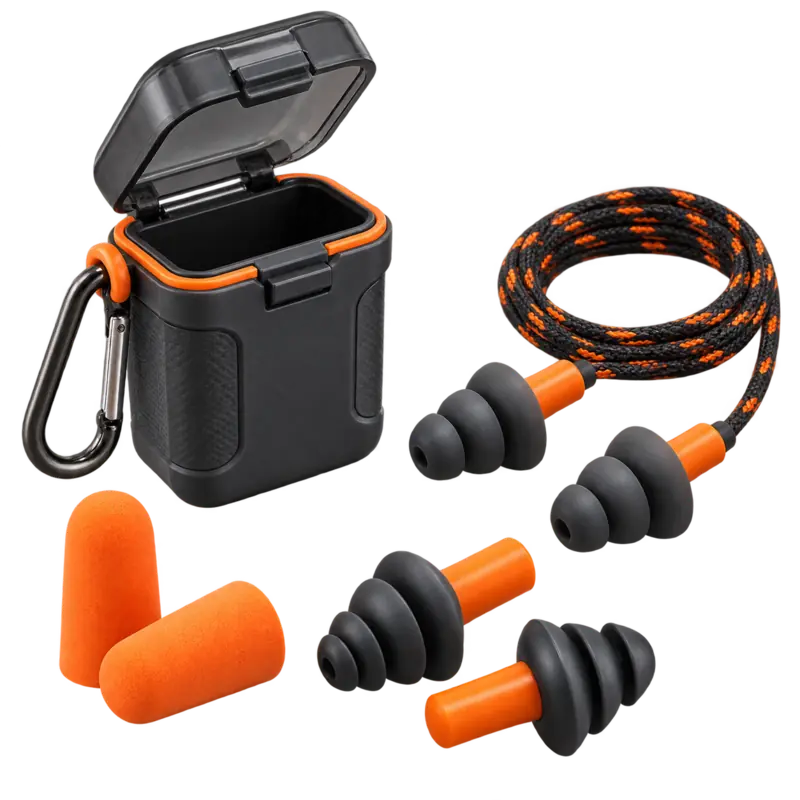
Plugs fit in the ear canal; muffs seal around the ear. Actual protection depends on selection, fit and correct wear. Combining them requires program-specific evaluation.
General, cut, impact & chemical gloves
Each targets different hazards. Material, coating, tested rating, grip, dexterity and chemical compatibility all matter; gloves can be an entanglement hazard around rotating equipment.
Standard, flame-resistant & arc-rated clothing
Ordinary workwear, flame-resistant garments and arc-rated garments are not interchangeable. Use only clothing selected for the identified hazard and verify its manufacturer ratings.
Fall restraint & fall arrest
Restraint is intended to keep a worker from reaching a fall hazard; arrest is designed to stop a fall after it begins. Equipment and anchorage must be chosen as a complete system.
Disposable & reusable respirators
Selection depends on contaminant and exposure. Reusable facepieces accept specific filters/cartridges; disposable filtering facepieces have different configurations. Program requirements apply to both.
Hard-hat types & electrical classes
Head-protection types and electrical classes indicate different intended performance. Read the exact shell marking and manufacturer instructions rather than relying on color or style.
Safety-toe & metatarsal footwear
A safety toe protects the toe area; metatarsal protection extends coverage over more of the top of the foot. Workplace hazards determine which verified ratings are needed.
Inspection & care
Protection has to stay serviceable
Follow manufacturer instructions and employer procedures. If condition is questionable, remove the PPE from service until it is properly evaluated.
Hard hats: inspect shells and suspensions separately for damage, deformation and deterioration.
Eye & face protection: clean using approved methods and store where lenses/visors will not be scratched or distorted.
Hearing protection: inspect plugs, cushions, foam, cups and bands for wear or loss of sealing ability.
Gloves: check for cuts, holes, tears, worn coatings, contamination and damaged seams before use.
Footwear: examine uppers, soles, tread, separation and protective components; address major impact damage.
Harnesses & connectors: inspect webbing, stitching, hardware, labels, lanyards/SRLs and connectors under the required procedure.
Respirators: store clean and protected; inspect facepieces, valves and seals, and keep cartridges/filters managed under the program.
Service life: track expiration, shelf-life, change-schedule and replacement information where the manufacturer or program requires it.
Contamination control: keep clean PPE separated from contaminated tools, clothing and chemicals.
Remove from service: damaged, contaminated, expired or questionable PPE should not go back in the gang box for the next worker.
Safety & field guidance
PPE is the last line of defense
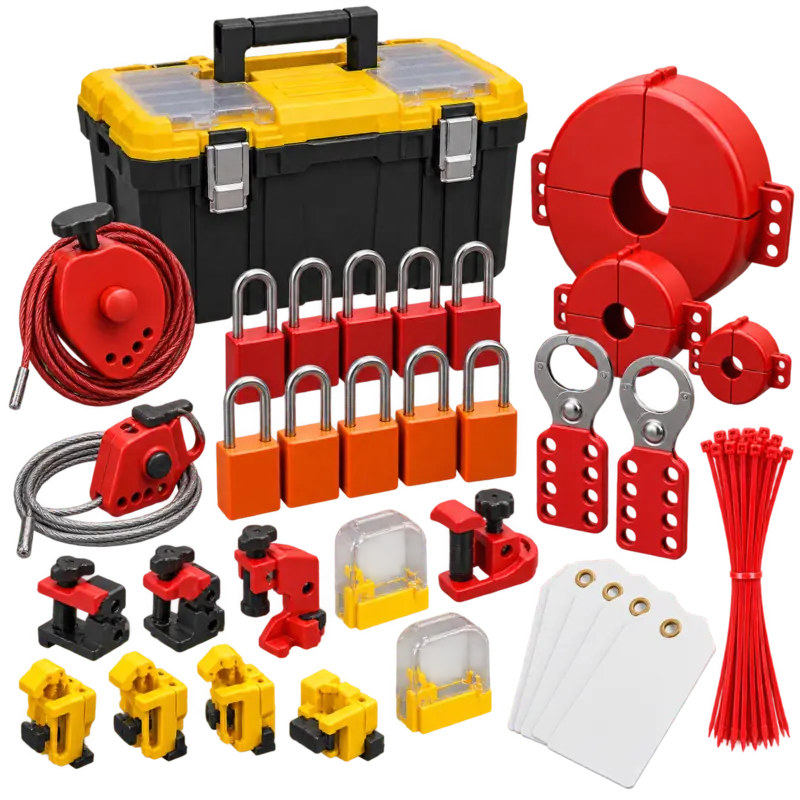
It does not replace hazard elimination, guarding, isolation, ventilation, engineering controls or lockout/tagout.
Hazard assessment governs: workplace assessments, employer requirements and site procedures determine required PPE.
Eye and face: face shields normally supplement appropriate eye protection rather than replace it.
Respirators: selection must match the contaminant and exposure; required medical evaluation, fit testing and training must occur before use.
Atmosphere limits: air-purifying respirators must not be used as if suitable for oxygen-deficient or immediately dangerous atmospheres.
Fall systems: harnesses, lanyards/SRLs, connectors and anchorage require compatible selection, inspection, clearance planning and proper training.
Protective clothing: flame-resistant and arc-rated clothing are not interchangeable terms.
Gloves: gloves can create entanglement hazards around rotating equipment.
Hearing protection: select it for the assessed noise exposure and wear it correctly.
Condition matters: damaged, contaminated, expired or questionable PPE must be removed from service.
Follow the controlling requirements: manufacturer instructions, employer rules, permits, programs and applicable safety regulations take precedence over this general guide.
Millwright tool questions
Frequently asked questions
Practical answers for comparing tools, planning the work and choosing equipment for the actual assignment.
What PPE does a millwright need?
Millwright PPE is selected from the employer's hazard assessment and the task, not from one universal shopping list. Common categories include head, eye, face, hearing, hand and foot protection, with respiratory, fall, arc-rated or flame-resistant equipment added only under the applicable program and training.
Type I vs Type II safety helmet: what is the difference?
Type I head protection is evaluated primarily for impact to the top, while Type II is evaluated for top and lateral impact under the applicable standard. Confirm the exact type, electrical class, suspension, accessories and site policy on the product label and employer requirements.
What gloves are best for millwright work?
No single glove is best for every task. Select for cut, puncture, abrasion, heat, chemical and dexterity needs, and follow restrictions around rotating equipment and entanglement hazards; remove damaged or contaminated gloves according to the site program.
Can a millwright buy and use any respirator or fall-arrest harness?
No. Respirators require an employer program, hazard evaluation, medical clearance, fit testing and correct cartridges or filters. Fall-arrest equipment must be compatible, inspected and used within an approved system that includes anchorage, clearance and rescue planning.
New and improved across the directory
Recently updated and related
Jump from the directory into the most useful supporting guide, related method or reviewed product group.